
Cost of Goods Sold for Makers: What It Means and Where Product Costs Belong
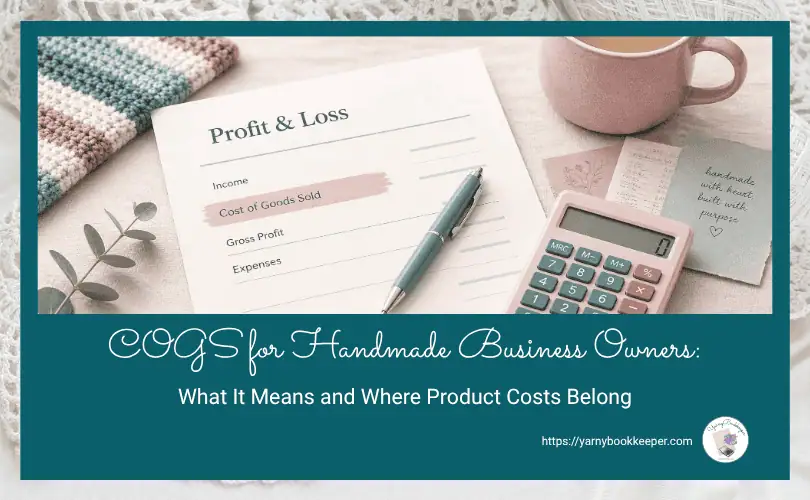
Cost of Goods Sold sounds like stiff accounting speak, but for handmade business owners it answers a very practical question: what did it actually cost to make and sell the products you sold? In this post, we’ll break down what COGS means, where it shows up on your Profit & Loss Report, and why the yarn, fabric, beads, wax, clay, packaging, and selling fees connected to sold products matter more than your sales number alone.

Bookkeeping for Makers: What to Track … (and What You Can Totally Ignore)
You’ve been told to separate personal and business money… and then left to figure out the rest on your own. So makers guess, overthink, or avoid bookkeeping altogether. In this post, you’ll learn exactly what to track in your handmade business (and what you can safely ignore), so you can stop second-guessing your numbers and focus on the money that actually matters.
When Should You Start A Bookkeeping System for Your Handmade Business? (Hint: It’s Earlier Than You Think)
Bookkeeping feels hard for many handmade business owners — not because it’s complicated, but because it’s often put off for too long. If you’ve been waiting for “later” to start, this post explains why starting small, starting now, and doing it weekly is the calm alternative you didn’t know you needed. Part 2 of the “Why Handmade Business Bookkeeping Feels Hard (And How to Fix It)” series.

Why Handmade Business Bookkeeping Feels Hard (And How to Fix It)
If bookkeeping makes your brain shut down, you’re not alone—and you’re not bad at business. Handmade business bookkeeping feels hard because you were given incomplete advice. This post explains why—and introduces a calmer, weekly way to fix it.
[Part 1 of a 9 part series for handmade business owners]