



Showing 68 Result(s)

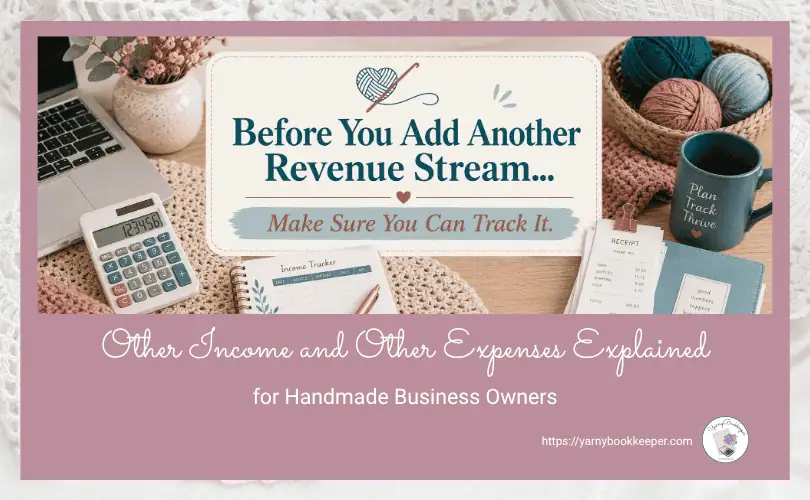
Other Income and Other Expenses Explained for Handmade Business Owners

Coaches love to talk about adding more revenue streams, and I’m not against that. But before you toss product sales, pattern sales, class income, ad revenue, affiliate commissions, and random rebates into one big “Sales” bucket, let’s talk about why that can make your reports muddy fast. Other Income and Other Expenses may sound like boring bookkeeping leftovers, but they can help you see what’s actually working in your handmade business, what belongs somewhere else in your books, and what just made the month look better than it really was.

Spread the love
image of a maker desk with a laptop, calculator, notebook, glasses, pen and yarn

Overhead Expenses Demystified for Handmade Business Owners

Overhead expenses are all those behind-the-scenes costs — rent, website hosting, shipping supplies, subscriptions, and more — that keep your handmade business alive… but often get ignored when you price your creations. This post shows you how to gather your expenses, calculate a realistic hourly or per-item overhead cost, and bake that number into your prices so you stop working for free.

Spread the love

Cost of Goods Sold for Makers: What It Means and Where Product Costs Belong

Cost of Goods Sold sounds like stiff accounting speak, but for handmade business owners it answers a very practical question: what did it actually cost to make and sell the products you sold? In this post, we’ll break down what COGS means, where it shows up on your Profit & Loss Report, and why the yarn, fabric, beads, wax, clay, packaging, and selling fees connected to sold products matter more than your sales number alone.

Spread the love

Income in Your Handmade Business: What Makers Need to Know

Income sounds simple until your handmade business has money coming in from product sales, patterns, classes, sales tax, ad revenue, affiliate commissions, and who knows what else. This post explains what makers need to know about tracking income clearly, why sales tax collected is not income, and why dumping every dollar into one big “Sales” bucket can make your reports tell a very messy story.

Spread the love

Equity: Accounting Speak Your Handmade Business

Equity is one of those bookkeeping words that sounds more complicated than it really is. For handmade business owners, equity is basically the owner’s piece of the business — shaped by the money you put in, the money you take out, and what the business builds over time. This post breaks it down in plain English, with real maker examples and a reminder that spreadsheet users do not need to panic if they don’t see a formal Equity section.

Spread the love