
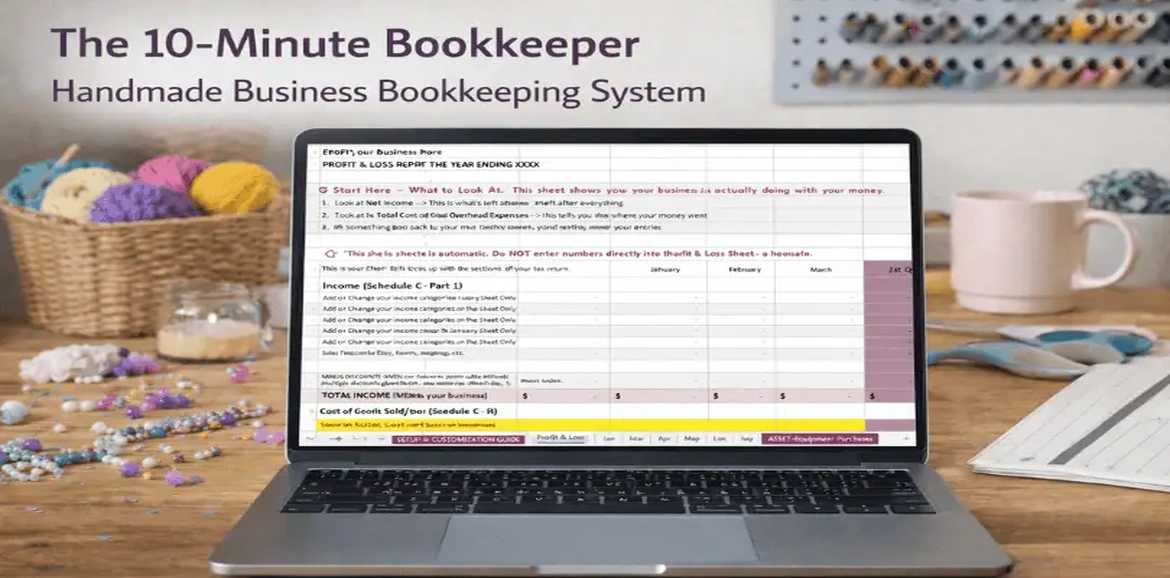
Get the structure and clarity of bookkeeping software in an easy-to-use spreadsheet built specifically for handmade business owners — without monthly fees or a giant learning curve.
The 10-Minute Bookkeeper gives you a practical way to know what you need to track, where it goes, and what your numbers are telling you — without turning bookkeeping into another giant job on your to-do list.
You don’t need to become a bookkeeper. You just need a simple system that helps you keep up with the money side of your business and understand what’s happening while you can still do something about it.
And yes — tax time gets easier too.
Want to skip ahead? See What you get inside the 10-Minute Bookkeeper ->
If your current bookkeeping setup feels like a mess, you’re not alone
A lot of handmade business owners are trying to piece things together with:
- random spreadsheets
- free templates
- notes in a notebook
- Stripe, PayPal, Etsy, or Square records
- a pile of receipts
- and a vague hope that it will all somehow work out later
And “later” often shows up at tax time.
But the confusion usually starts long before that.
Because the problem isn’t that you haven’t found the right spreadsheet yet. It’s that nobody has shown you how all these pieces are supposed to fit together.
A spreadsheet is not automatically a bookkeeping system.
Just because something has tabs, formulas, and category names does not mean it is helping you track your money in a way that actually makes sense.
A lot of DIY bookkeeping spreadsheets look organized at first glance, but they still leave you:
- guessing where expenses belong
- unsure what to do with inventory
- confused about cost of goods sold
- wondering whether you’re doing it “right”
- unable to clearly see whether you’re making a profit
- and scrambling to pull everything together at the end of the year
That’s not a real solution.
That’s just a tidier-looking mess.
Why generic spreadsheets keep letting handmade business owners down
Generic bookkeeping advice isn’t necessarily wrong — it just doesn’t always go far enough when you make and sell your own products.
Because handmade businesses are not as simple as “money in, money out.”
You may be dealing with:
- materials inventory
- finished inventory
- cost of goods sold
- multiple selling platforms
- processing fees
- shipping and packaging
- overhead
- equipment purchases
- tax categories that actually match what you’re spending money on
Most generic bookkeeping spreadsheets weren’t built with all of that in mind.
They weren’t built for the way handmade businesses actually work.
The 10-Minute Bookkeeper was.
This is a bookkeeping system — not just a bunch of tabs
The 10-Minute Bookkeeper is not just a collection of spreadsheets.
It is a system.
Everything works together on purpose.
The categories help you know where your day-to-day transactions belong — and they’re set up with tax time in mind too.
The reports are designed to help you actually see what’s going on in your business.
And the spreadsheets are built to help you keep up consistently, instead of putting things off until you’re buried and overwhelmed.
This wasn’t built by starting with a spreadsheet and figuring out what could fit inside it.
It was built around the bookkeeping handmade business owners actually need — by someone who understands both bookkeeping and the weird little moving pieces that come with making and selling your own products.
The goal was never to make something fancy.
It was to make something usable, flexible, and actually helpful in real life.
Take a Sneak Peek at What’s Inside
Want to see how the 10-Minute Bookkeeper is set up before you buy?
Watch the quick overview below to see how the spreadsheets work together, what you’ll actually be doing, and how the system helps you keep up with your bookkeeping without complicated software.
What this system helps you finally get a handle on
You don’t need to know everything there is to know about bookkeeping.
But you do need a way to keep track of the important stuff — and understand enough of what those numbers are telling you to make better decisions in your business.
The 10-Minute Bookkeeper helps you:
- track your income and expenses in a way that makes sense
- manage materials and finished inventory
- keep up with cost of goods sold without guessing
- see your numbers by month, quarter, and year
- see where your money is coming from — and where it’s going
- stop wondering whether you’re doing your bookkeeping “right”
- make tax time a whole lot easier
Because once the pieces are in the right place, bookkeeping becomes more than just recording transactions.
You can start using those numbers to answer questions like:
- Is my business actually making money — or just keeping me busy?
- Am I making enough on what I’m selling?
- Which selling platforms or sales venues are actually worth my time?
- What am I spending the most money on?
- Why does it feel like the money disappears so fast?
- Can I actually afford that next business purchase?
That’s the part of bookkeeping that gets overlooked.
You can treat it like a dreaded chore you avoid until the end of the year.
Or you can use it as a tool to understand what’s happening with your money and make better decisions all year long.
Selling more isn’t the same as keeping more. Knowing what’s happening with the money you’re already bringing in is a pretty damn good place to start.
Why “10 minutes” is more realistic than you think
This system is not about sitting down for three miserable hours trying to catch up on months of neglected bookkeeping.
It’s about keeping up a little at a time.
You’re not:
- recreating months of transactions
- sorting receipts into a million categories
- trying to fix your entire bookkeeping life in one weekend
You’re simply building the habit of staying current.
And no, “10 minutes” doesn’t mean every bookkeeping task in your business will magically take exactly ten minutes.
It means keeping your regular bookkeeping routine small enough that you’ll actually do it — instead of letting it pile up until it becomes a much bigger job.
When you keep up a little at a time, it’s easier to know what’s going on with your money without having to reconstruct everything later.
That’s what makes the system manageable.
And yes, that matters even during busy seasons.
Especially during busy seasons.

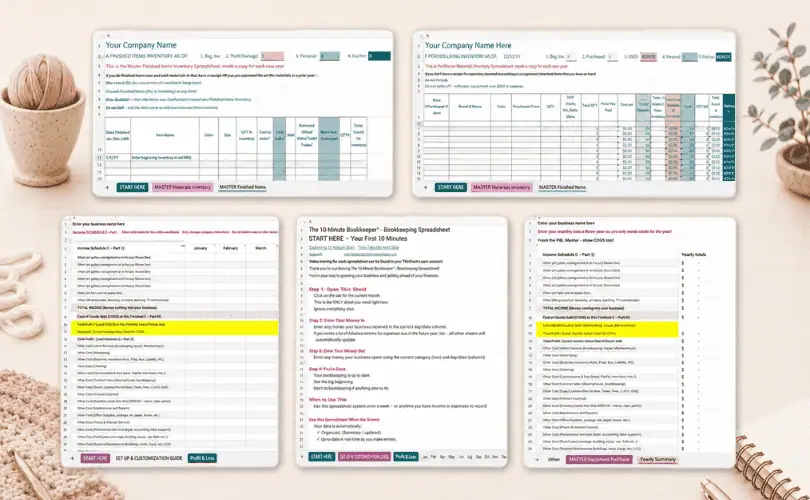
What you get inside the 10-Minute Bookkeeper
You’re not getting a blank spreadsheet and a cheerful little “good luck!”
The bookkeeping structure is already built for you — so you can spend your time using the system, not figuring out how to create one.
Your day-to-day bookkeeping system
- 12 monthly bookkeeping sheets for tracking your income and expenses throughout the year
- Bookkeeping categories already set up for you, including categories that line up with Schedule C
- Profit & Loss reports so you can see how your business is doing by month, quarter, and year
- Equipment & Asset tracking for those bigger business purchases
- Craft Fair Summary to help you see what’s happening with your market and event sales
Inventory, COGS & business tools
- Materials Inventory workbook for tracking the supplies you buy and use
- Finished Items Inventory workbook for tracking the products you’ve made
- Project COGS & Pricing Calculator to help you see what it actually costs to make what you sell
- Pattern Pricing Calculator for those of you selling digital patterns too
- Fair Hourly Wage Calculator to help you stop pretending your time is free
- Business Use of Home Worksheet for figuring the hourly cost of using your home for your business
- Money In & Money Out Register for those times when you need a simple way to keep track of what’s coming in and going out
Help getting everything set up and actually using it
You’ll also get:
- a Start Here guide so you know where to begin
- a Setup & Customization Guide to help you make the system fit your business
- step-by-step training videos that walk you through how the spreadsheets work
- help understanding where your expenses belong — including what to do with that ever-popular “Other” category
So you are not left staring at a spreadsheet wondering what on earth you’re supposed to do next.
The structure is already there. You just need to use it.ng at a spreadsheet wondering what on earth you’re supposed to do next.
Why makers choose this instead of piecing things together themselves
Could you build your own bookkeeping system from a bunch of spreadsheets, free templates, platform reports, and whatever else you can find?
Sure.
But then you have to figure out how all of those pieces are supposed to work together.
That’s the part The 10-Minute Bookkeeper has already done for you.
This system was built from both sides of the business:
- decades of real-world bookkeeping experience
- firsthand experience running a handmade business
- and years of helping makers figure out inventory, cost of goods sold, expenses, pricing, and all the other weird little moving pieces that generic bookkeeping advice doesn’t always cover
So instead of starting with a generic spreadsheet and trying to make your handmade business fit inside it, the system was built around the way handmade businesses actually work.
It gives you:
- a clear structure for what to track and where it goes
- a simple way to keep up without complicated bookkeeping software
- reports that help you see what’s happening with your money
- inventory and cost of goods sold tools built for businesses that actually make what they sell
- and enough guidance that you’re not left figuring everything out on your own
It was built for handmade, creative, and craft businesses.
Not generic small businesses.
Not corporate accounting departments.
Because when you’re making and selling your own products, bookkeeping has a few extra moving pieces.
You shouldn’t have to build the bookkeeping system before you can start using it.
Already have a bookkeeping spreadsheet — but still feel like something’s missing?
Having a spreadsheet doesn’t automatically mean you have a bookkeeping system that works for your handmade business.
You may already have somewhere to enter your income and expenses.
But if you’re still wondering:
- where inventory fits
- how cost of goods sold actually works
- whether you’re categorizing things correctly
- whether you’re really making money
- or what those numbers are actually telling you
…then your current setup may simply be stopping too soon.
A spreadsheet can look tidy and still leave you guessing.
The 10-Minute Bookkeeper is designed to give you the pieces that generic trackers and simple income-and-expense spreadsheets often leave out — so you can do more than record numbers.
You can understand what’s happening with your money and use that information to make better decisions in your business.
Because having somewhere to put the numbers is not the same thing as knowing what they mean.
The 10-Minute Bookkeeper is a good fit if…
- you sell handmade, creative, or craft products
- you want a spreadsheet system instead of complicated bookkeeping software
- you need to track more than just basic money in and money out
- you want step-by-step training that shows you what to do and how to use the system
- you want bookkeeping you can keep up with in small, regular chunks instead of letting it turn into another giant job
- you want to understand what’s happening with your money — without having to become a bookkeeper
You don’t need an accounting degree.
You need a system that fits the way your business actually works, shows you what to do, and helps you understand enough of your numbers to make better decisions.
This is probably not for you if…
This is probably not for you if…
- you want someone else to handle your bookkeeping for you
- you’re looking for full accounting software rather than a spreadsheet system
- you want something completely hands-off that does the bookkeeping without any regular input from you
And that’s okay.
The 10-Minute Bookkeeper is for the maker who wants to do her own bookkeeping — but wants the structure, tools, and training already figured out for her.siness owner who wants a clear, practical next step.
No subscription. No monthly fee. No nonsense.
The 10-Minute Bookkeeper is a one-time purchase.
No subscription.
No monthly fee.
No renewals.
Buy it once, learn how to use it, and keep using it year after year.
Ready to stop guessing and feel more confident about your numbers?
You don’t need to become a bookkeeper.
You don’t need perfect bookkeeping habits.
You just need a system that helps you:
- know what to track and where it goes
- keep up with your bookkeeping without turning it into another giant job
- understand what’s happening with your money
- use your numbers to make better decisions in your business
The 10-Minute Bookkeeper was built specifically for handmade business owners — with the structure already in place and step-by-step training to show you how to use it. benefits of software without the learning curve — the 10-Minute Bookkeeper is ready for you.


If you'd rather be working with yarn, fabric, paint, or clay than trying to figure out what the heck is going on with your business money, you're in the right place.
I help makers understand what’s happening with their money—and what those numbers actually mean for their business. Because handmade business bookkeeping goes beyond simply tracking what came in and what went out.
You don’t need to become a bookkeeper or run out and get an accounting degree. You just need to understand enough to make better decisions about your business without all the accountant-speak.
👉 Want help figuring out your bookkeeping (without overcomplicating it)? Join the Free Handmade Business Bookkeeping community.
I am a coach/educator, not your bookkeeper or CPA. This information is for educational purposes, not financial or tax advice.
Full Disclosure - How I use AI
I use AI to create some blog images because it does a much better job of producing maker-specific images than I can usually find after hours of searching.
The ideas, teaching, and writing in my blog posts are mine. I use AI as an editing partner to help me check clarity, rein in my tendency to get too wordy, and occasionally keep me from wandering off on a tangent.
- Is Profit Leaking Out of Your Handmade Business?Here’s Four Warning Signs - October 21, 2026
- Are Discounts Hurting Your Handmade Business? - October 16, 2026
- Free Bookkeeping Software for Handmade Businesses: What to Look For + Options to Consider - October 5, 2026
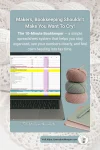
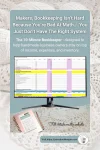
[…] spreadsheet doesn’t give you a clear way to separate owner contributions from business income, The 10-Minute Bookkeeper includes categories for recording money you put into the business without mixing it into your […]
[…] And if you’re ready for the full “keep it simple” system (income, expenses, and inventory tracking without spreadsheet chaos), check out the 10-Minute Bookkeeper — it’s built specifically for handmade businesses. Learn more here. […]
[…] the 10-Minute Bookkeeper Spreadsheet System, owner’s draws and contributions can be tracked so you can see both the monthly totals and […]
[…] 10-Minute Bookkeeper is a handmade business bookkeeping spreadsheet system designed to keep your income, expenses, COGS, […]
[…] why the 10-Minute Bookkeeper focuses on tracking owner contributions, owner draws, sales tax collected, inventory, income, […]
[…] you’re using spreadsheets and want some of the asset categories already set up for you, the 10-Minute Bookkeeper includes a prebuilt Chart of Accounts, inventory tracking, equipment (asset) purchases […]
[…] Learn more about the 10-Minute Bookkeeper Handmade Business Bookkeeping System […]
[…] is one place where the 10-Minute Bookkeeper can help if you’re not ready for full bookkeeping software […]
[…] handmade business owners who prefer spreadsheets, the 10-Minute Bookkeeper includes this kind of structure already built […]
[…] Want the DIY route? Follow the posts below. Want the “done-for-you-ish system” that keeps your bookkeeping + inventory tracking consistent all year? Check out the 10-Minute Bookkeeper. […]
[…] If you want help actually setting this up in a way that makes sense (without complicated spreadsheets or accountant-speak), that’s exactly what I walk you through here in the 10-Minute Bookkeeper: Handmade Business Spreadsheet Bookkeeping System. […]
I sell made-to-order jewelry that I make, as well as resale a few products I do not make (I purchase them wholesale and sell on my website). Would this allow me to track both COGS for my made-to-order jewelry as well as ready to sell inventory?
Hi Meghan – great question! (And I’m going do do a little out loud typing as I think through your situation).
First let’s talk about the items you purchase at wholesale & resell.
The “inventory” part of the system has two spreadsheets – one for materials and one for finished items – in your case, you wouldn’t use the Materials spreadsheet and could simply use thee “finished items” spreadsheet to track the wholesale items you purchase and resell (you’d just rename that spreadsheet).
On the actual “bookkeeping spreadsheet” in the COGS section you easily “rename” the current category called “Materials from Inventory (Used in finished items sold)” to something like “Premade “X” (X being whatever those items are).
Now let’s talk about your made-to-order items.
I’m going to assume that you only purchase supplies for that specific item and have nothing leftover. When you make those purchases, you’d assign them to the existing COGS category called “Materials & Supplies”.
IF you had leftover materials – then you would add them to the materials inventory spreadsheet.
I know this is all “words” and you don’t get to actually “see” what I’m talking about – but I think with just a couple minor tweaks, my system would work for you.
Hi there,
When entering my materials inventory, will the software average the cost of (exact) materials?
I look forward to your response.
Hi Dawn
Not quite sure I understand what you mean by “average” (everyone has their own definition and so does accounting terms), so let me give you a couple of examples:
On the YES side if you buy a skein of yarn that has 190 yards and you paid $2.53 for it the spreadsheets calculate a cost per yard of $0.0133 per yard. The spreadsheet will do the same calculation if you use Ounces, grams, meters.
On the NO side – if you buy 3 skeins at $2.53 per skein ($7.59) and 3 months LATER buy 3 more skeins of the EXACT same yarn at $2.00 per skein ($6.00), it would NOT tell that you have 6 skeins valued at $2.265 per skein.
If you want your inventory valued at 6 skeins at $2.265 then you would need really inventory software and not a spreadsheet.
If you have additional questions, please feel free to shoot me an email through the “contact page“.
[…] Skip to Content Looking for a Handmade Business Spreadsheet Bookkeeping System?MORE… […]
[…] Skip to Content Looking for a Handmade Business Spreadsheet Bookkeeping System?MORE… […]
Does this also work with the Canadian Tax system?
Hi Donalda, thanks for stopping by and leaving a comment.
Yes, this will work with Canada as well as the U.S. tax systems. Both countries track the same things, they are just in different locations on the actual tax forms.
Have a great day!
This sounds great! How soon do you expect it to launch?
Hi Kristen, thanks for dropping by. I’ll be launching the 10-Minute Bookkeeper System on 11/22/24. Stay tuned for more details 🙂