

This inventory + COGS for handmade businesses round-up has been created with new and updated blog posts. If you’re doing a January “reset” (or gearing up for tax season), start here.
If you’re a handmade business owner and the words inventory and cost of goods sold (COGS) make your brain want to do a Windows reboot … welcome. You’re in the right place.
This page is your Inventory + COGS for Handmade Businesses “Start Here” round-up — a simple, step-by-step path you can follow this month and every January (and honestly, any time you want a clean financial reset).
Most inventory + COGS info online gives you a formula… and then leaves you to figure out what it means for your yarn, your finished items, and your tax return. This January Reset is different: it walks you through the whole story—inventory → COGS → profit → Schedule C—in plain English, one step at a time.
Want the DIY route? Follow the posts below. Want the “done-for-you-ish system” that keeps your bookkeeping + inventory tracking consistent all year? Check out the 10-Minute Bookkeeper.
No guilt. No jargon spiral. Just the real-life version of:
- what inventory is
- why it matters
- what it really means when your Tax Pro says “just expense your yarn”
- how to track it (without creating a spreadsheet monster)
- how it connects to COGS + your bookkeeping
Bookmark this page as each week I’ll be releasing a new or updated blog post all about inventory + COGS (and I’ll be posting the links here).
Future-you will send you a thank-you card.
The Inventory + COGS for Handmade Businesses Series (Read them in this order)
While you’re waiting for all the posts to go live, start with the Quick Start Checklist
1. What is Inventory? (And Why It Matters So Much for Handmade Businesses)
Start here if you’re not 100% sure what counts as inventory (spoiler: it’s more than your yarn stash).
2. How Inventory Works (and Why It Matters) in Your Handmade Business
This is the “ok, but how does it actually move?” post — purchases, usage, what’s left, and why it matters for taxes.
✨Bonus: Year-End Physical Inventory Tips for Handmade Business Owners
👉 If it’s January or tax season, don’t skip this. This is your practical “go do the count … now” post — perfect at year-end or as a January reset when you’re getting organized for the year ahead.
Read the Physical Inventory Tips post (it’s live)
3. How to Track Materials Inventory for a Handmade Business (Without Losing Your Mind – Especially If You’re Using Spreadsheets)
What to track, what most makers miss, and why random spreadsheets turn into 25-column chaos.
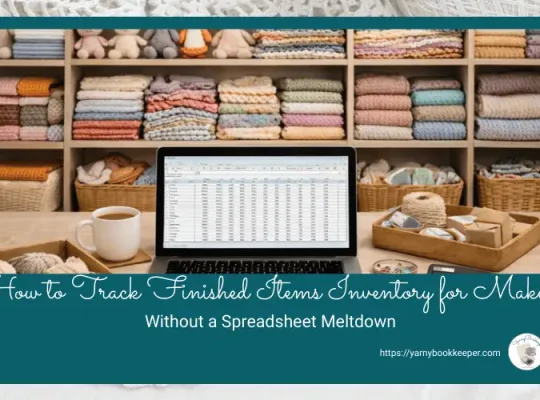
4. How to Track Finished Items Inventory for Makers — Without a Spreadsheet Meltdown
Because tracking materials is one thing … tracking finished items is a whole other layer (and it matters).
5. Why Track Cost of Goods Sold? The Missing Link to Profit in Your Handmade Business
Cost of Goods Sold (COGS) is where inventory finally shows up as a deduction — and it can make a big difference in your numbers.
6. COGS + Inventory: 3 Reasons Handmade Sellers Can’t Ignore
Before we calculate anything, I’ll show you the 3 reasons COGS + inventory matter (pricing, profit, and taxes) — so you understand what you’re tracking and why.
7. How to Calculate Cost of Goods Sold (COGS) for a Handmade Item (Step-by-Step)
The practical “show me how” post — calculations, what to include, and common mistakes that mess up your totals.
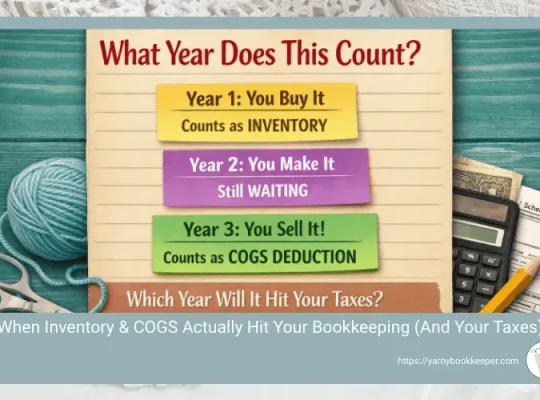
8. When Inventory & COGS Actually Hit Your Bookkeeping (And Your Taxes)
The “where does this go?” post — when inventory becomes COGS and what that looks like in your bookkeeping to tax form flow.
QuickStart Checklist (Do This First)
If you’re feeling overwhelmed, do these in order:
- 👉 If it’s January or tax season, don’t skip this. Do a quick inventory check – (materials + finished items — even rough counts beat guessing. Know how much money you have sitting on the shelf)
- Gather receipts – for supplies/materials (yes, even the messy pile)
- Pick a tracking method (spreadsheets or software — just choose what you’ll actually use)
- Track true cost (shipping, tax, discounts matter more than most makers realize)
- Use this series to connect the dots: inventory ➡️ COGS ➡️ bookkeeping ➡️ tax time
Want an Easier Way to Track Inventory (Without Building a Spreadsheet Monster)?

If you’re using spreadsheets (or want to) but you do not want to create a 25-column beast from scratch, I built a system for that.
Inside the 10-Minute Bookkeeper – Handmade Business Spreadsheet Bookkeeping System, you’ll find:
- Materials Inventory tracking
- Finished Items Inventory tracking
- built-in formulas that do the math for you
- important tax time information
- a bookkeeping flow designed for handmade businesses
Take a peek inside the 10-Minute Bookkeeper here.
FAQ (Because You’re Probably Wondering …)
Do I really have to track inventory if I’m small?
If you make products to sell, inventory affects when you can deduct those material costs (even if your Tax Pro tells you “just expense your yarn”). The goal isn’t perfection — it’s having a simple, consistent system so you’re not guessing at tax time.
What counts as inventory for a handmade business?
Typically: materials and supplies used to create products (and often finished items too). If it’s part of what you sell, it usually matters.
What’s the difference between inventory and COGS?
Inventory is what you have on hand. COGS is the cost of the materials used in the items you sold. Inventory becomes COGS when the finished product sells.
I’m behind. Is it too late?
Nope. Makers are famous for last-minute number-crunching mode. Start where you are, do the next right step, and use this round-up to keep it simple.
My Tax Pro said to “just expense my yarn.” Can I do that?
Maybe — it depends on how your tax return is being handled. Some tax pros simplify things for very small businesses, but for many makers, materials used to make products are treated as inventory, which means the cost is deducted when the finished item sells (as COGS), not when you buy the yarn.
If you’re unsure, ask: “Are you treating my materials as inventory/COGS or expensing supplies — and why is that best for my business?”
(I’ll talk more about this in Part 2 – How Inventory Works and why it’s important in your handmade business)





Yeah, you *can* just expense your materials and that’s what I did based on the recommendation of my tax person (at the time).
What a mess!
It’s so much easier to just do it the right way from the beginning.
I’m thrilled with the 10-Minute Bookkeeper – Handmade Business Spreadsheet Bookkeeping System but the quick-start checklist is just what I needed to start now instead of in 3 months.
I’m looking forward to the rest of the series!
Oh AJ, I’m so sorry you were given that advice, people “mean well” but it’s often not the best advice you’ll ever hear. That’s why I’m here and why I created this series – the things in this series may not be what people “want to hear” but it’s the real version.
You’re right – it’s so much easier to just bite the bullet (or cry into you materials) and just track inventory right from the beginning.
I’m so glad that you’re thrilled with the “10-Minute Bookkeeper”, it was a labor of love (and a bazillion formulas).