A Handmade Product Pricing Calculator That Includes COGS
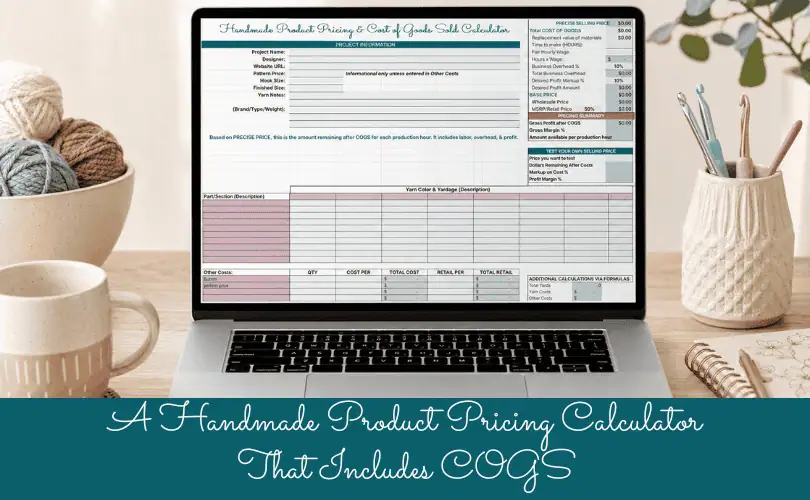
A free handmade product pricing calculator that helps you calculate actual COGS, labor, overhead, profit, wholesale pricing, markup, margin, and more.

A free handmade product pricing calculator that helps you calculate actual COGS, labor, overhead, profit, wholesale pricing, markup, margin, and more.

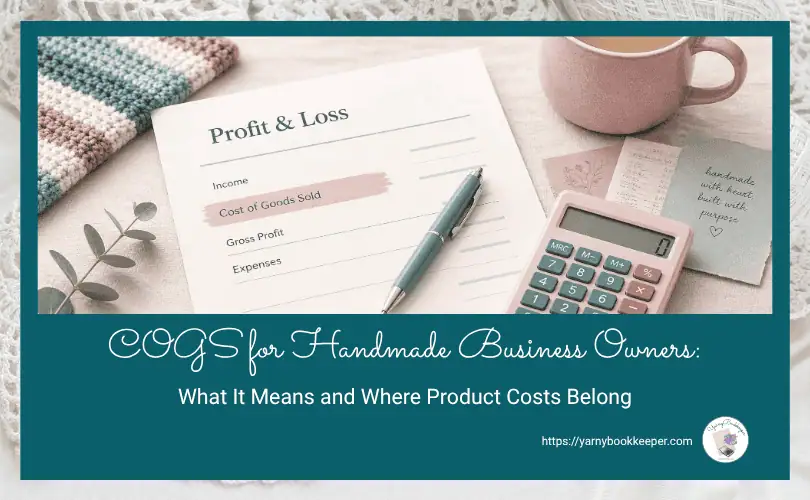
Cost of Goods Sold sounds like stiff accounting speak, but for handmade business owners it answers a very practical question: what did it actually cost to make and sell the products you sold? In this post, we’ll break down what COGS means, where it shows up on your Profit & Loss Report, and why the yarn, fabric, beads, wax, clay, packaging, and selling fees connected to sold products matter more than your sales number alone.

Income sounds simple until your handmade business has money coming in from product sales, patterns, classes, sales tax, ad revenue, affiliate commissions, and who knows what else. This post explains what makers need to know about tracking income clearly, why sales tax collected is not income, and why dumping every dollar into one big “Sales” bucket can make your reports tell a very messy story.

Equity is one of those bookkeeping words that sounds more complicated than it really is. For handmade business owners, equity is basically the owner’s piece of the business — shaped by the money you put in, the money you take out, and what the business builds over time. This post breaks it down in plain English, with real maker examples and a reminder that spreadsheet users do not need to panic if they don’t see a formal Equity section.

I’m speaking at the 2026 Crochet Sellers Summit! Join me July 15–17 for this free virtual event for crochet product sellers, where I’ll be sharing how to spot profit leaks and understand why selling more isn’t always the same as keeping more.

Liabilities are the money your handmade business owes — like credit card balances, sales tax collected but not yet paid, supplier bills, or equipment loans. In this post, we’ll break down what liabilities mean in plain English, how they show up in your Chart of Accounts, and why tracking what your business owes helps you avoid accidentally spending money that’s already spoken for.

Assets are one of those accounting words that sounds fancier than it needs to. In plain English, assets are the things your handmade business owns or controls that have value — like money in the bank, payment processor balances, inventory, equipment, or customer invoices waiting to be paid. In this Accounting Speak post, we’ll break down what assets mean for handmade business owners without turning it into a bookkeeping headache.

What is a Chart of Accounts, and why does it matter in your handmade business? It’s the list of categories that organizes your business finances, and if those categories are a mess, your reports will be too. This plain-English guide breaks down your bookkeeping categories, explains what belongs where, and helps you make more sense of your numbers.