(A guest blog post by Kelly Thomas of Crochet Business School).
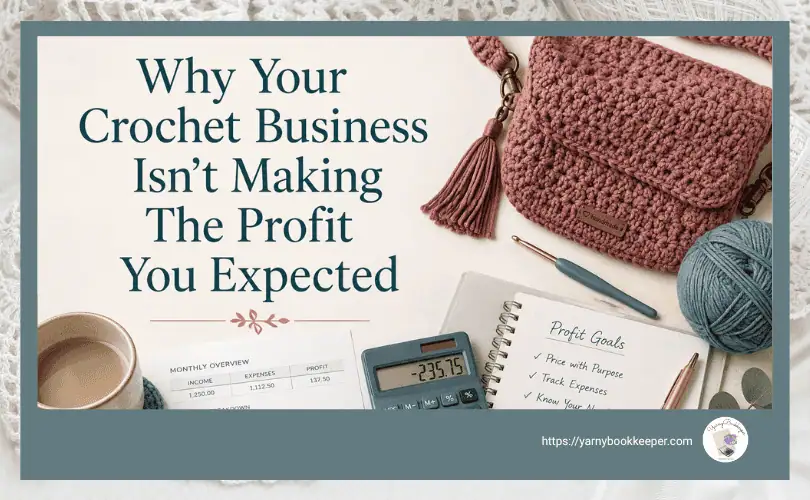
Most crochet businesses struggle to make the profits they expected when that business is based on selling the crochet that they make. But why and how can this be fixed so that you can start making a living from your crochet?
Most crochet businesses start out by selling the crochet that they make. You probably didn’t even think of yourself as a business at the start, you were just selling some things to make the family finances balance a bit easier or to afford that upcoming holiday. For many of us the idea of actually making a living from our crochet comes down the line when we realise that it has the potential to allow us to stay home with the kids or escape the soul crushing 9-5.
But then we just assume that we can just sell more of our crochet and the numbers will work out. We throw ourselves into the doing without ever sitting down and working out the maths.
And the maths doesn’t work – at least not if you’re selling the crochet that you make (I’ll get to what does work later on in the post).
The sooner those calculations are done, the sooner you can start thinking about your alternatives. If you don’t do the maths you just carry on oblivious and it isn’t until you’ve put major time and effort into making your business work that you start wondering why your crochet isn’t making even close to the money that you assumed it would.
Why The Competition Problem Is Bigger Than You Think
The first thing to remember is that when you’re selling the crochet that you make, you’re not just competing with other crocheters for that sale. You’re competing with EVERYONE who sells that item. So if you’re selling bags then you’re not just competing with other crochet bag makers for that sale, you’re competing with fabric bag makers, leather bag makers and the big corporate companies too.
Do you know what makes a crocheter stand out from these other companies? We can’t use machines or buy in our fabric. We not only make the bag but we make the fabric by hand too. So automatically we are charging a much higher price because we have to do everything by hand including making our fabric and the yarn we use to crochet that fabric costs just as much as a sewer pays for the cotton fabric for her bag. So a sewer may have 2 hours of labour going into her bag, but crocheters can have 10 hours plus of labour to account for.
We can’t compete on price. And yet so many crocheters try and price competitively to give themselves a better chance of making that sale. But what’s the point of pricing competitively if you are actually losing money?
The Real Maths
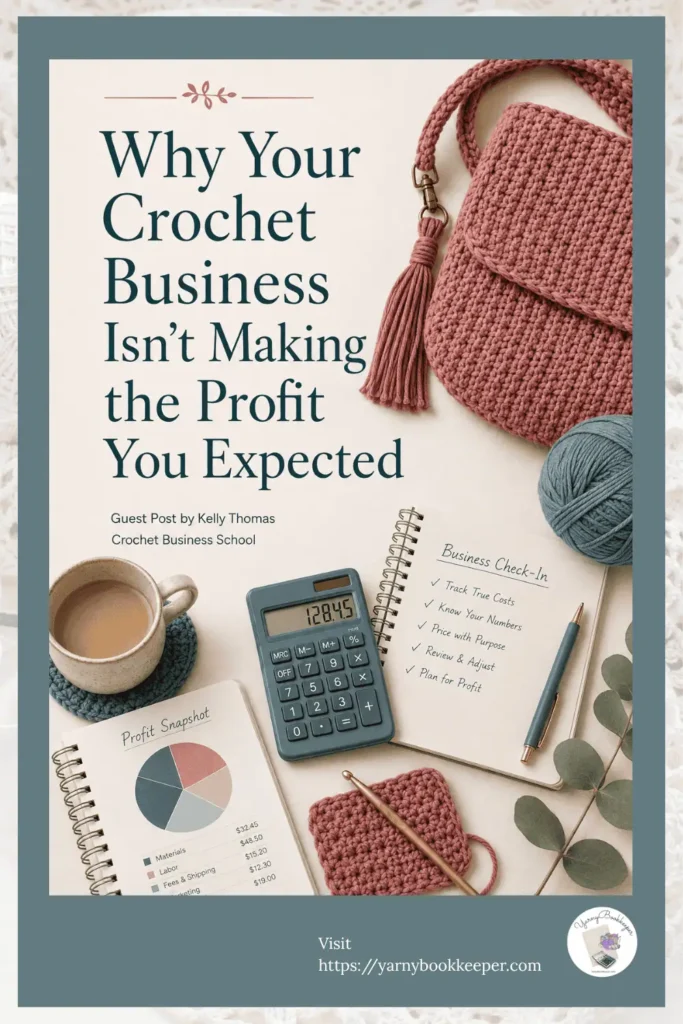
A quick search on Etsy showed that a crossbody bag is averaging in price at around $50. But if a crocheter tried to be competitive with that price how much would they make in profit? Let’s say the yarn cost $20, other components such as zips and D rings cost $5, fees cost $5.20. That leaves $19.80. That’s not a bad profit if you’re just wanting to make a bit of extra cash. But if you want to make a living from your crochet and that bag took you 10 hours to make, then that means you earned just $1.98 per hour.
No one can live off that.
Some people are willing to accept a lower hourly wage when working for themselves because it means they don’t have to deal with the stress of a 9-5 and a micromanaging boss. But you also shouldn’t have to accept that.
If you do accept the lower hourly wage, you’re accepting that you’re building an audience for your crochet who will always expect your prices to be lower than they should be. If you ever get tired of this and start raising your prices, you’ll have to build a new audience who are able to afford your price range.
You’re just hobbling yourself for the long term with lower pricing. And you still won’t be able to afford to take time off, so it still doesn’t solve the other problems you’re having.
The Difference Between Extra Cash And Making A Living
This is where the difference between a seller just trying to make a bit of extra cash and someone trying to make a living from their crochet comes in.
For the crochet seller wanting to make some extra cash, they don’t have to account for their hourly wage. When they make a sale that covers the cost of all their materials and fees plus makes a bit extra, that’s their goal achieved. But if you want to make a living from your crochet, then your time becomes a cost. Because no one can live off $3 an hour. Now it’s impossible for you to price your crochet competitively and you become the most expensive bag seller out there.
This is why making a living from selling your crochet is so hard:
- You can never become competitive price wise
- You can’t take time off without losing income
- The flexible lifestyle you dreamed of isn’t possible
- You can’t guarantee making enough to pay the bills each month
This is why I would never point to selling the crochet that you make as a viable way to make a living. Now don’t get me wrong, it is possible if you go down the route of luxury brands, collectibles or as an art form. But these 3 all take a lot of time and money to get set up and make work. For the average crochet seller it just isn’t an option with the life goals that come with it.
The Alternative = Recurring Income
If you want the ability to spend more time with your family, have flexible working hours, take time off away from your business when you want and be able to guarantee you can pay the bills each month, then you need a different way to make your crochet pay.
You can make a living from your crochet, but that needs to be through recurring income.
The battle with making a living from selling your crochet is the time versus profit battle. The numbers just never add up. But with recurring income this problem is removed. You do the work once and then profit from that piece of work for years to come. There is no limit to the amount of profit you can make from a single recurring income product. It also solves the taking time off and flexible working problem. Recurring income is automated, so if you take time off you can make a sale and the whole product delivery system works on automation needing zero input from you. So you keep earning without needing to be present at all.
Recurring income is where you do the work once and then profit from that original piece of work over and over again. You’ve seen plenty of examples of this in the crochet world already and have probably bought a few yourself:
- Crochet patterns
- Blogs
- Classes and courses
- YouTube
- Affiliate links
- Memberships
- E-books and printables
All of these are forms of recurring income and they’re not that difficult to get up and running.
It can be daunting going from the idea of a crochet business that is simple to run – make something, sell it, repeat, to a crochet business that feels like it would be complicated to set up. But recurring income is just creating a digital product and then selling it, or earning from it on repeat. It can be as simple or as complicated as you make it and doesn’t have to cost a lot of money to get started.
Just like a crochet business selling what you make, it takes time to grow your audience, it takes time to build your reputation. But it doesn’t have to take long for the money to start rolling in. You have far more opportunities and a much higher return on your time with recurring income than you could ever have selling what you make.
If you’re ready to explore that change and turn your crochet business into the profit making machine that you can make a living from, then come on over to CrochetBusinessSchool.com and I can show you how to get started.

- Why Your Crochet Business Isn’t Making The Profit You Expected - August 16, 2026