

[If bookkeeping for your handmade business makes your brain shut down, you’re not alone—and you’re not bad at business. Handmade business bookkeeping feels hard because you were given incomplete advice. This post explains why—and introduces a calmer, weekly way to fix it.]
If bookkeeping makes your brain want to shut down like an old laptop with 37 tabs open… you’re not alone.
And no — this doesn’t mean you’re bad at business.
👉 It usually means you’ve been trying to run a real handmade business using advice that was incomplete at best.
A lot of makers are taught things like:
- “Just track your sales.”
- “You can catch up once a year at tax time.”
- “Just export your reports (from Etsy, Shopify, etc.) and paste them into a spreadsheet.”
- “If you’re not a numbers person, bookkeeping will always be hard.”
None of that sets you up for confidence.
Wondering “why good bookkeeping records matter – especially at tax time“, start here…..
So let’s slow this way down and talk honestly about why handmade business bookkeeping feels hard — and how to fix it without overwhelm.
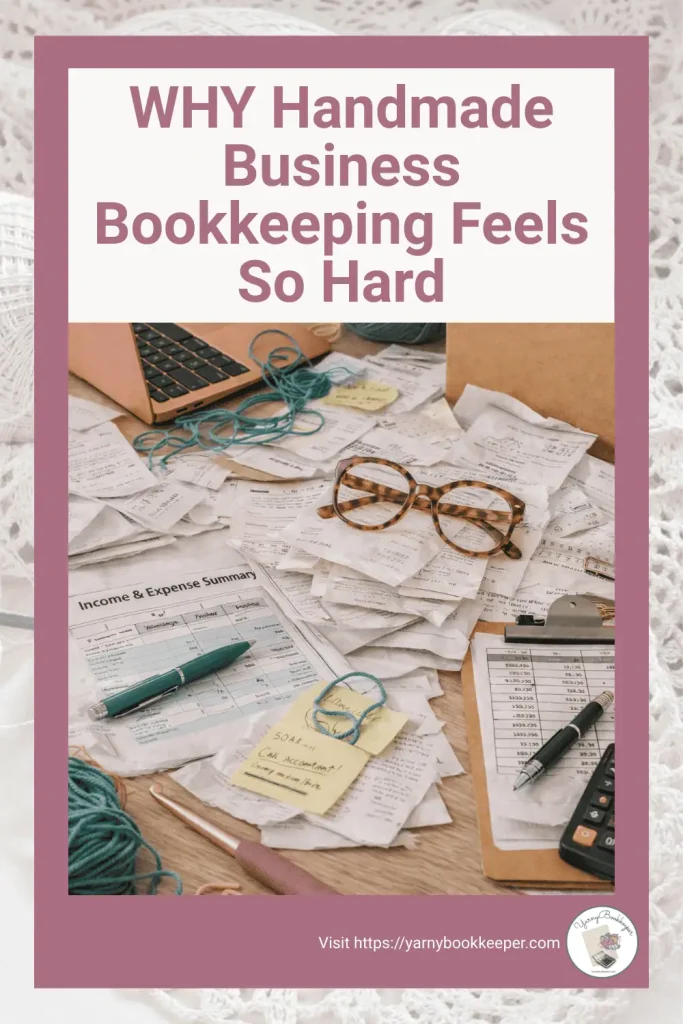
Why Handmade Business Bookkeeping Feels So Hard
Bookkeeping doesn’t feel hard because you’re doing it wrong.
👉 It feels hard because handmade businesses are not simple businesses, even though they’re often treated that way.
You’re juggling:
- materials purchased in bulk
- products made over time
- multiple sales channels
- platform fees and payment processing fees
- shipping, packaging, and postage adjustments
- inventory and cost of goods sold
- sales tax rules that aren’t always clear
👉 That’s a lot — and pretending it’s “simple” doesn’t make it so.
You’re Not Bad at Business
If you can design, make, photograph, list, market, ship, and customer-service your products, you are not the problem.
Handmade Business Money Is Messier Than People Admit
Most bookkeeping advice assumes:
- one product
- one price
- one income stream
- one clear expense list
That’s not how handmade businesses work.
👉 Handmade business money moves in layers, and when those layers aren’t acknowledged, bookkeeping starts to feel confusing, frustrating, and discouraging.
The Real Reason Bookkeeping Feels Hard for Handmade Businesses
Here’s the part most people don’t say out loud:
👉 Bookkeeping advice for makers is often designed to sound easy, not to be accurate.
You Were Given Incomplete (and Overly Simple) Advice
👉 “Easy” advice usually skips the parts that matter most — the parts that explain why your numbers feel off.
Let’s talk about what usually gets left out.
Missing Piece #1: Fees and Reality-Based Income
Etsy fees, payment processing fees, and platform adjustments don’t always show up the way people expect.
So makers end up thinking:
My sales were $10,000… why doesn’t my bank account reflect that?
Because sales and deposits are not the same thing — and bookkeeping systems care about that difference.
Missing Piece #2: Inventory and Cost of Goods Sold (COGS)
👉 If you sell physical products, your expenses don’t all count the moment you spend the money.
Materials often become inventory, and inventory turns into cost of goods sold only when an item is sold.
When this isn’t tracked properly, profit looks distorted — sometimes better than it really is, sometimes worse.
Missing Piece #3: Timing (Why Once-a-Year Bookkeeping Backfires)
When bookkeeping is saved for once a year, you’re asking yourself to remember:
- what that random charge was six months ago
- which purchases were personal vs business
- what materials were used for which products
- how different sales channels worked together
That’s not bookkeeping.
That’s financial archaeology.
If inventory/COGS makes your brain reboot, start here…
The Fix Isn’t “Try Harder” — It’s Smaller and More Frequent
The solution isn’t more willpower or better memory.
👉 The solution is weekly bookkeeping.
Bookkeeping works best when it’s:
- small
- consistent
- boring (in the best way)
👉 Weekly bookkeeping removes the pressure to remember everything later.
What Weekly Bookkeeping Looks Like for a Handmade Business
Weekly bookkeeping is usually 30–60 minutes, not an all-day event –> and it can actually be accomplished using spreadsheets!

Once you understand why bookkeeping feels hard, the next step is understanding why the records themselves matter. This post breaks down why good bookkeeping records matter (especially at tax time) — without fear or shame.
Here’s what it actually looks like.
Step 1: Record Your Income
Log your sales or deposits from Etsy, Shopify, Square, PayPal, or other platforms — depending on how your system is set up.
Step 2: Record Your Expenses
Enter expenses for:
- supplies and materials
- shipping and packaging
- tools, software, subscriptions
- fees, ads, and business services
Categorize them as you go.
Step 3: Check for Errors and Weird Stuff
This is your quick sanity check:
- duplicate charges
- refunds
- forgotten subscriptions
- “wait… what is this?” moments
Step 4: Use the Numbers to Make One Small Decision
This is where bookkeeping becomes useful.
Examples:
- Do prices need adjusting?
- Did shipping costs increase?
- Is inventory spending lining up with sales?
One small insight per week is plenty.
“But I’m Behind…” (Why That Doesn’t Mean You Failed)
Being behind doesn’t mean you messed up.
It usually means bookkeeping was treated like a future problem instead of a weekly habit.
The fastest way out of bookkeeping chaos is:
- Start doing it weekly going forward
- Then work backward in small chunks
Once weekly bookkeeping becomes normal, catching up stops feeling impossible.
Wondering “when you should start a bookkeeping system for your handmade business”, start here…..
The Weekly Bookkeeping Mindset Shift Handmade Businesses Need
You don’t need to become a numbers person.
You need a system that:
- doesn’t rely on memory
- doesn’t require marathon tax weekends
- doesn’t pretend Etsy is your bookkeeper
- supports your creativity instead of draining it
Weekly bookkeeping isn’t punishment. It’s protection.Quick “Start Here” Checklist (No Pressure)
If you want to take action today, do this:
✅ Choose one day each week for bookkeeping (same day every week)
✅ Commit to 30–60 minutes only
✅ Record this week’s income and expenses
✅ Categorize as you go (don’t save it for later)
✅ Make ONE small decision based on what you see
That’s how calm bookkeeping begins.
This Post Is Part of a Larger Series
If this post made you feel a little less alone, good—that’s exactly the point.
This is the first post in a 9-part series designed to help handmade business owners understand why bookkeeping feels so hard—and how to fix it without overwhelm, shame, or giving up your creativity.
Over the next two months, we’ll walk through bookkeeping before, during, and after tax season, focusing on what actually works for handmade businesses (not the shortcuts that sound good but fall apart later).
Here’s what’s coming next.
📅 The Full Series Schedule
- Why Handmade Business Bookkeeping Feels Hard (And How to Fix It) – THIS POST
- When Should You Start A Bookkeeping System for Your Handmade Business? (Hint: It’s Earlier Than You Think)
- Top 5 Bookkeeping Myths Keeping Makers Broke
- Get Financially Organized (Maker Style)
- March 29 – Is Your Bookkeeping System Set Up Right?
- April 5 – Bookkeeping for Makers: What to Track (And What You Can Ignore)
- April 12 – Money In, Money Out: Stop Guessing
- April 19 – Bookkeeping Doesn’t Have to Steal Your Creativity
- April 26 – Your Weekly Bookkeeping Reset Plan for Handmade Businesses
Each post builds on the last, so you can move from confusion → clarity → a calm weekly system by the end of the series.
While You’re Waiting for the Next Posts…
If you want to keep going right now, these posts pair perfectly with today’s topic:
- Why Good Bookkeeping Records Matter (Especially at Tax Time)
- When you should start a bookkeeping system for your handmade business
More help and information:
- Inventory + COGS for Handmade Businesses: Start here series
- Tax Time for Handmade Business Owners: Start Here series
If you don’t want to miss the next post in this series, make sure you’re subscribed to our newsletter or bookmark this page—I’ll be publishing new posts weekly.


If you'd rather be working with yarn, fabric, paint, or clay than trying to figure out what the heck is going on with your business money, you're in the right place.
I help makers understand what’s happening with their money—and what those numbers actually mean for their business. Because handmade business bookkeeping goes beyond simply tracking what came in and what went out.
You don’t need to become a bookkeeper or run out and get an accounting degree. You just need to understand enough to make better decisions about your business without all the accountant-speak.
👉 Want help figuring out your bookkeeping (without overcomplicating it)? Join the Free Handmade Business Bookkeeping community.
I am a coach/educator, not your bookkeeper or CPA. This information is for educational purposes, not financial or tax advice.
Full Disclosure - How I use AI
I use AI to create some blog images because it does a much better job of producing maker-specific images than I can usually find after hours of searching.
The ideas, teaching, and writing in my blog posts are mine. I use AI as an editing partner to help me check clarity, rein in my tendency to get too wordy, and occasionally keep me from wandering off on a tangent.
- Is Profit Leaking Out of Your Handmade Business?Here’s Four Warning Signs - October 21, 2026
- Are Discounts Hurting Your Handmade Business? - October 16, 2026
- Free Bookkeeping Software for Handmade Businesses: What to Look For + Options to Consider - October 5, 2026


[…] Skip to Content 👉 NEW SERIES: "Where Did the Money Go? Budgeting for Handmade Businesses"👉 […]
[…] Skip to Content 👉 NEW SERIES: "Why Bookkeeping for Your Handmade Business Feels Hard"👉 […]
[…] Skip to Content 👉 NEW SERIES: "Why Bookkeeping for Your Handmade Business Feels Hard"👉 […]