

Other Income and Other Expenses Explained for Handmade Business Owners
Coaches love to talk about adding more revenue streams, and I’m not against that. But before you toss product sales, pattern sales, class income, ad revenue, affiliate commissions, and random rebates into one big “Sales” bucket, let’s talk about why that can make your reports muddy fast. Other Income and Other Expenses may sound like boring bookkeeping leftovers, but they can help you see what’s actually working in your handmade business, what belongs somewhere else in your books, and what just made the month look better than it really was.

Liabilities: Accounting Speak for Money Your Handmade Business Owes
Liabilities are the money your handmade business owes — like credit card balances, sales tax collected but not yet paid, supplier bills, or equipment loans. In this post, we’ll break down what liabilities mean in plain English, how they show up in your Chart of Accounts, and why tracking what your business owes helps you avoid accidentally spending money that’s already spoken for.
What Are Assets? Accounting Speak for Handmade Business Owners
Assets are one of those accounting words that sounds fancier than it needs to. In plain English, assets are the things your handmade business owns or controls that have value — like money in the bank, payment processor balances, inventory, equipment, or customer invoices waiting to be paid. In this Accounting Speak post, we’ll break down what assets mean for handmade business owners without turning it into a bookkeeping headache.
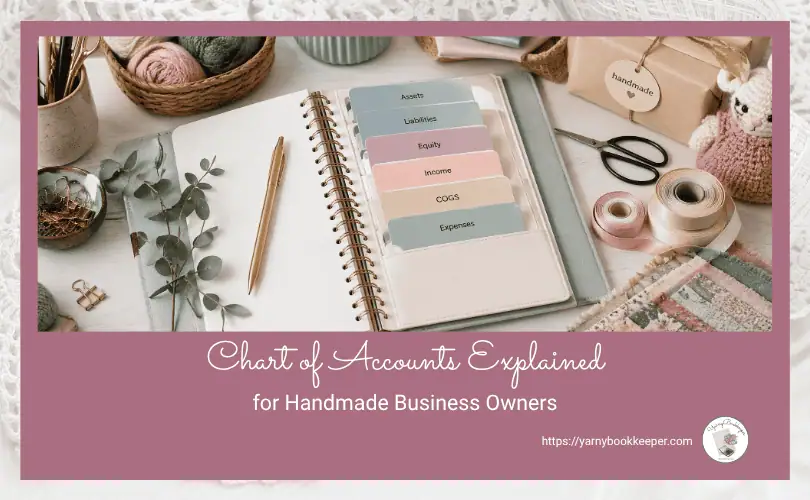
Chart of Accounts Explained for Handmade Business Owners
What is a Chart of Accounts, and why does it matter in your handmade business? It’s the list of categories that organizes your business finances, and if those categories are a mess, your reports will be too. This plain-English guide breaks down your bookkeeping categories, explains what belongs where, and helps you make more sense of your numbers.
Should Handmade Business Owners Do Bookkeeping Weekly or Monthly?
Should handmade business owners do bookkeeping weekly or monthly? The answer depends on your system. If you’re using spreadsheets, selling in multiple places, collecting sales tax, or trying to remember what that mystery charge was three weeks later, monthly bookkeeping may not be enough. Here’s how to keep your books from turning into a tax-time crime scene.
A Weekly Bookkeeping Reset Plan for Handmade Businesses
If bookkeeping only happens at tax time, it will always feel stressful. A weekly bookkeeping reset plan for handmade businesses breaks it into one manageable hour: record income, categorize expenses, check your balances, and review your totals. Small, consistent check-ins keep your business steady — and your creativity protected.
Bookkeeping Doesn’t Have to Steal Your Creativity (For Handmade Businesses)
Most handmade business owners don’t avoid bookkeeping because they’re bad at it — they avoid it because they were taught incomplete advice that made it feel stressful, rigid, and creativity-killing. Bookkeeping doesn’t have to steal your creativity. When built to match how handmade businesses actually work, calm money systems protect your creative energy instead of draining it.