
Cost of Goods Sold for Makers: What It Means and Where Product Costs Belong
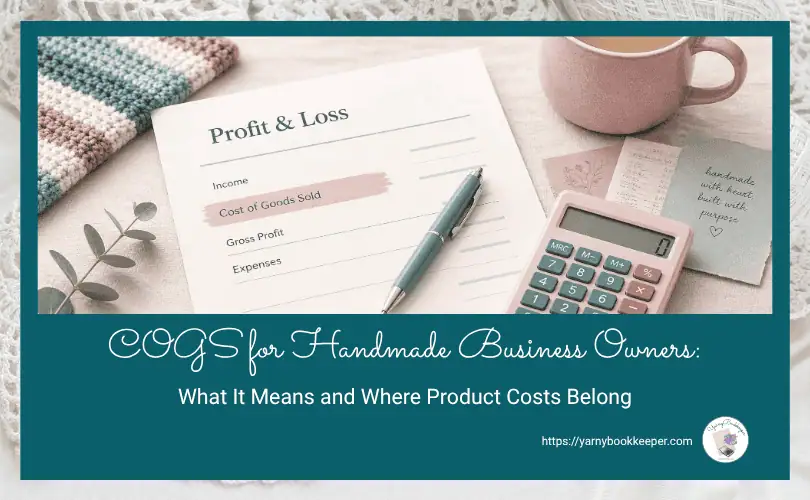
Cost of Goods Sold sounds like stiff accounting speak, but for handmade business owners it answers a very practical question: what did it actually cost to make and sell the products you sold? In this post, we’ll break down what COGS means, where it shows up on your Profit & Loss Report, and why the yarn, fabric, beads, wax, clay, packaging, and selling fees connected to sold products matter more than your sales number alone.

When Inventory + COGS Actually Hit Your Bookkeeping (And Your Taxes)
Confused about when inventory and Cost of Goods Sold actually affect your taxes? This post breaks down when inventory becomes COGS, why your profit can feel “off,” and how it all shows up on your Schedule C—without accounting jargon or panic.
This post was originally written & published 1/27/2020 and has been updated.

How to Calculate Cost of Goods Sold (COGS) for a Single Handmade Item (Step-by-Step)
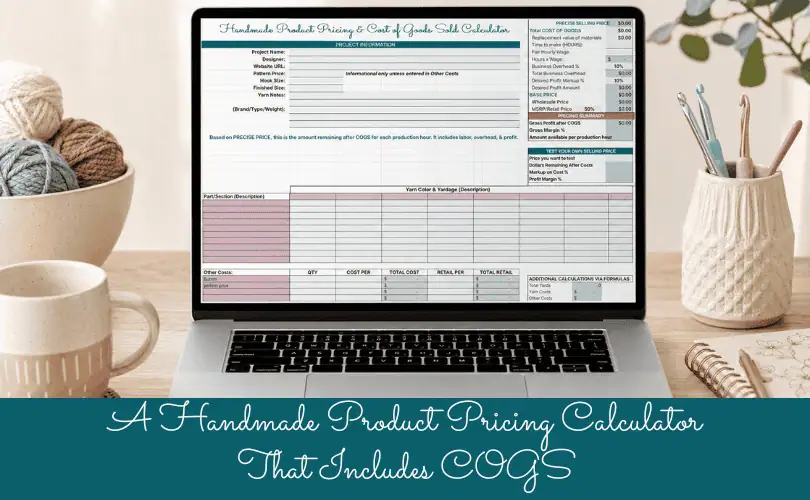
COGS doesn’t have to feel like a mystery novel. Here’s how to calculate cost of goods sold for one handmade item using a crochet amigurumi witch—materials, selling fees, and the bookkeeping flow. PLUS there’s a video showing how this is done using the 10-Minute Bookkeeper system including the Handmade Product Pricing & COGS Calculator. Part 7 of the Inventory + COGS for Handmade Businesses series.

COGS + Inventory: 3 Reasons Handmade Sellers Can’t Ignore
Tracking Cost of Goods Sold (COGS) and inventory can feel confusing because bookkeeping, pricing, and taxes all use them differently. This post breaks down the 3 real reasons handmade sellers need to track COGS + inventory — with a full start-to-finish example so your numbers (and profit) finally make sense.

Why Track Cost of Goods Sold? The Missing Link to Profit in Your Handmade Business
Selling a lot but still feeling like the profit is… missing? 😵💫 Cost of Goods Sold (COGS) is the missing link between your inventory and your real profit. In this post, you’ll learn what COGS is (in plain English), why handmade business owners should track it, and how it connects to pricing and tax time—without the accounting headache. 🧶📒

