
Overhead Expenses Demystified for Handmade Business Owners
Overhead expenses are all those behind-the-scenes costs — rent, website hosting, shipping supplies, subscriptions, and more — that keep your handmade business alive… but often get ignored when you price your creations. This post shows you how to gather your expenses, calculate a realistic hourly or per-item overhead cost, and bake that number into your prices so you stop working for free.

Equity: Accounting Speak Your Handmade Business
Equity is one of those bookkeeping words that sounds more complicated than it really is. For handmade business owners, equity is basically the owner’s piece of the business — shaped by the money you put in, the money you take out, and what the business builds over time. This post breaks it down in plain English, with real maker examples and a reminder that spreadsheet users do not need to panic if they don’t see a formal Equity section.

Liabilities: Accounting Speak for Money Your Handmade Business Owes
Liabilities are the money your handmade business owes — like credit card balances, sales tax collected but not yet paid, supplier bills, or equipment loans. In this post, we’ll break down what liabilities mean in plain English, how they show up in your Chart of Accounts, and why tracking what your business owes helps you avoid accidentally spending money that’s already spoken for.

Accounting Speak in Your Handmade Business: A Plain-English Guide
Bookkeeping feels a whole lot harder when the words themselves don’t make sense. If you’ve ever looked at a report, opened your bookkeeping software, or talked to a tax pro and thought, “What the hell does that even mean?” this post is for you. It breaks down common accounting terms for handmade business owners in plain English so you can understand your numbers with more clarity and a lot less confusion.
Should Handmade Business Owners Do Bookkeeping Weekly or Monthly?
Should handmade business owners do bookkeeping weekly or monthly? The answer depends on your system. If you’re using spreadsheets, selling in multiple places, collecting sales tax, or trying to remember what that mystery charge was three weeks later, monthly bookkeeping may not be enough. Here’s how to keep your books from turning into a tax-time crime scene.
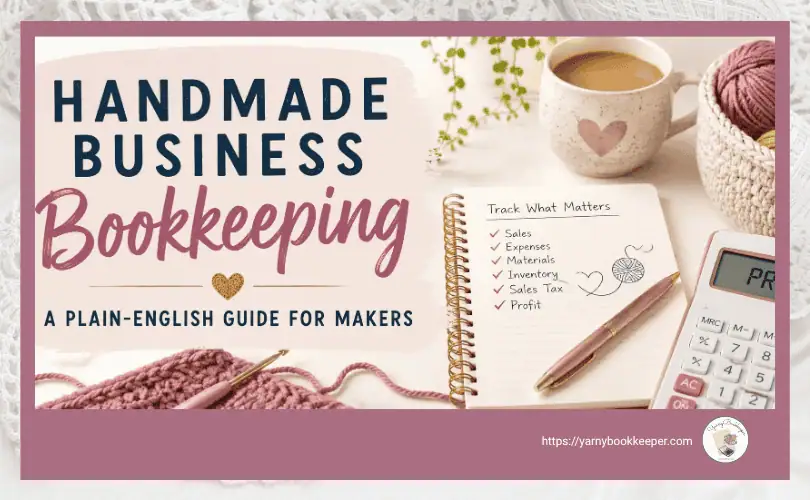
Handmade Business Bookkeeping: A Plain-English Guide for Makers
Handmade business bookkeeping gets messy fast when you’re dealing with sales, fees, materials, inventory, sales tax, owner draws, and the eternal mystery of why your sales look good but your bank account still feels rude. This plain-English guide walks you through what to track, what matters, and how to tell whether your bookkeeping is still simple or starting to need more structure.