

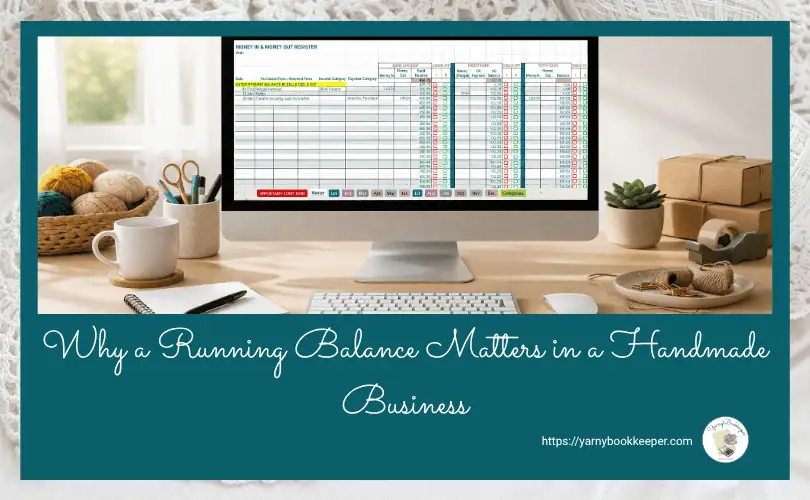
Why a Running Balance Matters in a Handmade Business
If your business money feels hard to follow from one week to the next, a running balance can help you see what’s actually happening. In this post, I’m sharing why a running balance matters in a handmade business and the simple Money In & Money Out Register I created to help makers track their money more clearly.


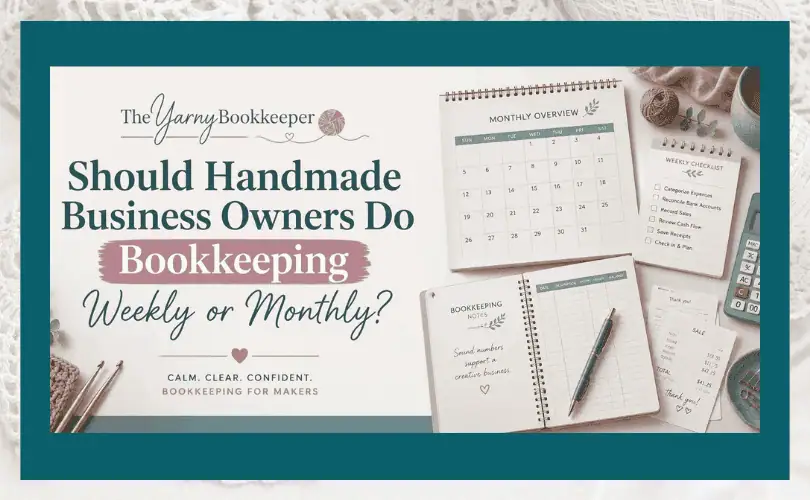
Should Handmade Business Owners Do Bookkeeping Weekly or Monthly?
Should handmade business owners do bookkeeping weekly or monthly? The answer depends on your system. If you’re using spreadsheets, selling in multiple places, collecting sales tax, or trying to remember what that mystery charge was three weeks later, monthly bookkeeping may not be enough. Here’s how to keep your books from turning into a tax-time crime scene.
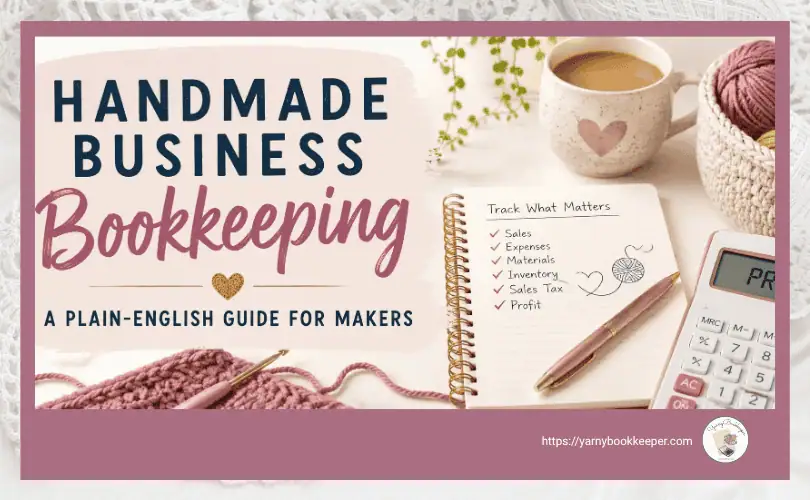
Handmade Business Bookkeeping: A Plain-English Guide for Makers
Handmade business bookkeeping gets messy fast when you’re dealing with sales, fees, materials, inventory, sales tax, owner draws, and the eternal mystery of why your sales look good but your bank account still feels rude. This plain-English guide walks you through what to track, what matters, and how to tell whether your bookkeeping is still simple or starting to need more structure.

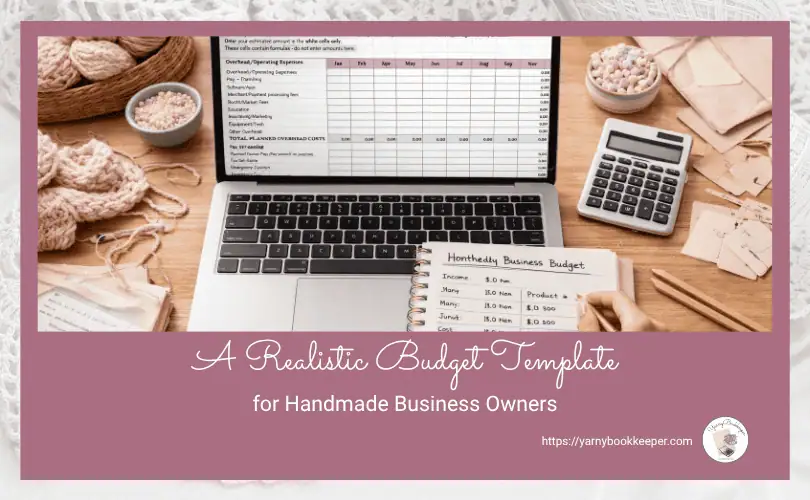
Handmade Business Budget: Why You Need One (Even If You Hate the Idea)
If the word “budget” makes you want to run, you’re not alone. For many handmade business owners, budgeting feels like restriction when money already feels tight. But a budget is not punishment. It’s a decision-making tool that helps you plan for expenses, spot money leaks, and start paying yourself on purpose.