Feeling like your bookkeeping is a MESS?
Like you meant to stay on top of it … but now tax time is creeping closer and you’re already stressed?
You’re not alone. Not even a little.
(NOTE: This post was originally written & published on 11/30/2019 and updated 1/14/2026 to provide clearer, cleaner information about cleaning up your bookkeeping BEFORE tax time.)
This is Post #2 in the Tax Time for Handmade Business Owners: Start Here series – and it’s all about cleaning things up enough so you can stop panicking and start making decisions with real information.
👉 Wondering “What Does the IRS Actually Want From Your Handmade Business“? – check out this post.
I was chatting with a handmade business owner the other day who told me:
- “I’m great at cranking out products and scheduling craft fairs.”
- “I’m scrambling at tax time.”
- “I have no sense of my cash flow.”
- “I lack discipline to do the office stuff.”
- “I don’t have a system.”
- “I suck at winging it .. badly.”
If any of that sounds familiar, take a breath. This post is for you.

The dilemma of the bookkeeping mess
Of course your bookkeeping is a mess.
When you’re focused on making products, fulfilling orders, posting on social media, and prepping for shows, the office stuff always gets pushed to the bottom of the list. That’s how handmade businesses work.
But here’s the honest part (said with love): This mess didn’t appear out of thin air.
Bookkeeping messes are inevitable… unless you take the same focus, creativity, and organization you use in your making and apply it to the money side of your business.
And yes — you absolutely have those skills. You just haven’t been using them here yet.
👉 Read “6 Reasons WHY you need good bookkeeping records“
How to clean up your messy books – BEFORE tax time
This is not about becoming a “perfect bookkeeper.” This is about getting your numbers clear enough that tax time doesn’t feel like a disaster movie.
Let’s break it down.
6 simple steps to clean up your bookkeeping mess
Step 1 – Yell, scream, throw a tantrum
Yep. We’re starting here.
Vent about how much you hate:
- bookkeeping
- numbers and taxes
- the piles of receipts
- the fact that you “should’ve done this sooner”
Get it out of your system. No judgment.
Then — and this part matters — we move on.
Step 2 – Assess the damage
Now that the tantrum is over, take a deep breath.
Grab a pen and paper and figure out:
- what you have done
- what you haven’t done
- what might need to be redone
This isn’t about beating yourself up.
It’s about understanding what you’re actually working with.
Step 3 – Gather up all that paperwork
Your financial info is probably scattered everywhere:
- Sales info in Etsy, PayPal, Square, Shopify, etc.
- Receipts in email folders, boxes, bags, and random drawers
- Bank and credit card statements sitting quietly online
Go get all of it and put it in one place — ideally a folder on your computer labeled something like:
20XX Tax Info
One pile. One digital home. No hunting.
👉 Need help? Read this post “How to Organize Your Bookkeeping Paperwork”
Step 4 – Get to work, clean up the mess BEFORE tax time
Now it’s time to roll up your sleeves.
Approach this the same way you’d prep for the BIGGEST craft fair you’ve ever done. You already know how to organize chaos — this is just a different kind of setup.
If you’re staring at piles of paper and thinking “Where do I even start?”, start here:
👉 How to organize your bookkeeping paperwork
That will help you corral the chaos before you start entering numbers.
Next, decide how you’re going to record this year’s tax info:
- a spreadsheet
- or bookkeeping software
If spreadsheets feel like the least overwhelming option right now, the 10-Minute Bookkeeper was built specifically for handmade business owners who want to clean things up without spiraling:

Once you’ve chosen your tool:
- Print out everything you gathered in Step 3
- Grab a 12-pocket file organizer or file folders
- Organize everything by month
Enter your info one month at a time, and make sure it matches your bank and credit card statements before moving on.
This isn’t about perfection. It’s about being clear enough that you’re not guessing — and tax time stops feeling scary.
If you want to be confident you’re pulling together what the IRS actually expects (and not doing extra, unnecessary work), grab this:
👉 IRS-Ready Checklist
Step t – Create systems for next year
Believe it or not, you’ve already started building a system.
Think of this like designing a pattern or making a finished item:
- You chose your materials (spreadsheet or software)
- You gathered supplies (receipts and statements)
- You organized your workspace (monthly folders)
- You settled in to create (entered your data)
That is a system — and it’s one you can refine.
Step 6 – Celebrate …. then evaluate
You did it. Seriously.
Your bookkeeping mess is cleaned up enough, and you’re ready to move forward instead of hiding.
After the celebration, take a moment to evaluate:
- Did your system feel manageable?
- Did it take way more time than it should have?
- Is this something you want to repeat next year?
Just like a project that took 9 hours instead of 3, this is your cue to ask:
Is there a better, easier way to do this next time?
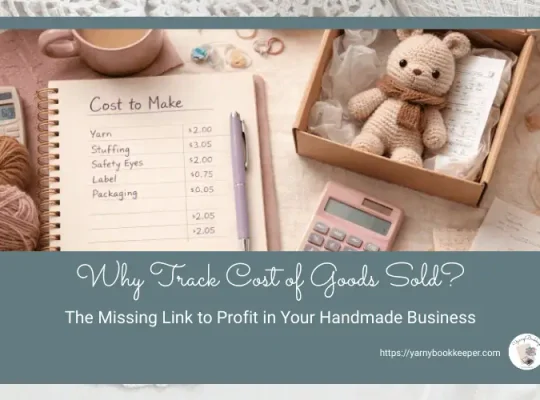
👉 Why Tracking Cost of Goods Sold Matters for Handmade Businesses
What comes next?
Now that your books are cleaned up enough to breathe again, it’s time for the next big (and very important) question:
👉 Are You a Hobby or a Business in the Eyes of the IRS?
That distinction affects:
- what you can deduct
- how your income is treated
- and how seriously the IRS takes your handmade business
Stay tuned for Part 3 of the series to make sure you’re setting yourself up the right way — before you file anything.


If you'd rather be working with yarn, fabric, paint or clay than deal with a pile of receipts or bookkeeping spreadsheets, you're in the right place.
I help you get a handle on your numbers, make sense of what's coming in and going out, and actually feel confident running your business -- without accountant-speak or guilt.
👉 Want help figuring out your bookkeeping (without overcomplicating it)? Join the free bookkeeping community.
I am a coach/educator, not your bookkeeper or CPA.This information is for educational purposes, NOT financial or tax advice.