



Owner’s Draw for Handmade Business Owners: How to Pay Yourself Without Messing Up Your Books
Owner’s draws are how small business owners pay themselves — but they’re often misunderstood. In this article, you’ll learn what an owner’s draw is, how it works in handmade businesses, and how to record it correctly in your bookkeeping.
This post was originally published in 2020 and has been updated to provide clearer information.
When Should You Start A Bookkeeping System for Your Handmade Business? (Hint: It’s Earlier Than You Think)
Bookkeeping feels hard for many handmade business owners — not because it’s complicated, but because it’s often put off for too long. If you’ve been waiting for “later” to start, this post explains why starting small, starting now, and doing it weekly is the calm alternative you didn’t know you needed. Part 2 of the “Why Handmade Business Bookkeeping Feels Hard (And How to Fix It)” series.

Why Handmade Business Bookkeeping Feels Hard (And How to Fix It)
If bookkeeping makes your brain shut down, you’re not alone—and you’re not bad at business. Handmade business bookkeeping feels hard because you were given incomplete advice. This post explains why—and introduces a calmer, weekly way to fix it.
[Part 1 of a 9 part series for handmade business owners]
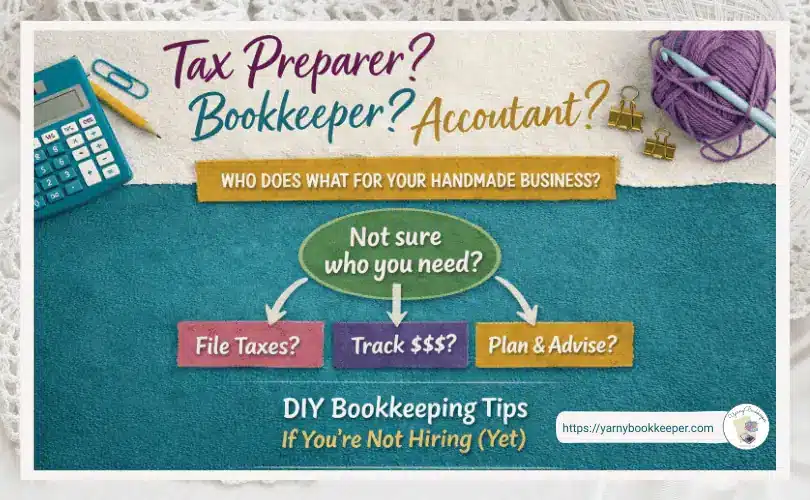


Bookkeeping + Schedule C: A Step-by-Step Guide for Handmade Business Owners
Schedule C doesn’t have to feel confusing or intimidating. If you’re a handmade business owner with a solid bookkeeping system, this tax form becomes much easier to complete. In this post, you’ll learn how your bookkeeping numbers flow directly into Schedule C, what the IRS is really asking for, and how organizing your income, expenses, inventory, and cost of goods sold can make tax time far less stressful.