
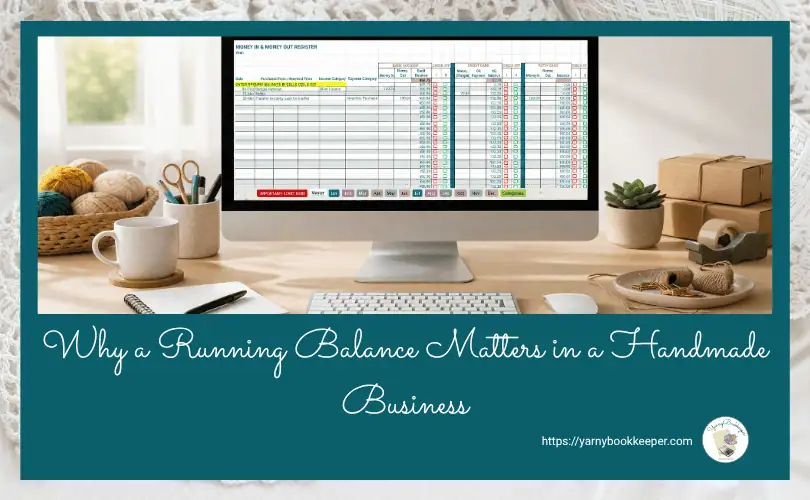
Why a Running Balance Matters in a Handmade Business
If your business money feels hard to follow from one week to the next, a running balance can help you see what’s actually happening. In this post, I’m sharing why a running balance matters in a handmade business and the simple Money In & Money Out Register I created to help makers track their money more clearly.
A Weekly Bookkeeping Reset Plan for Handmade Businesses
If bookkeeping only happens at tax time, it will always feel stressful. A weekly bookkeeping reset plan for handmade businesses breaks it into one manageable hour: record income, categorize expenses, check your balances, and review your totals. Small, consistent check-ins keep your business steady — and your creativity protected.
Bookkeeping Doesn’t Have to Steal Your Creativity (For Handmade Businesses)
Most handmade business owners don’t avoid bookkeeping because they’re bad at it — they avoid it because they were taught incomplete advice that made it feel stressful, rigid, and creativity-killing. Bookkeeping doesn’t have to steal your creativity. When built to match how handmade businesses actually work, calm money systems protect your creative energy instead of draining it.
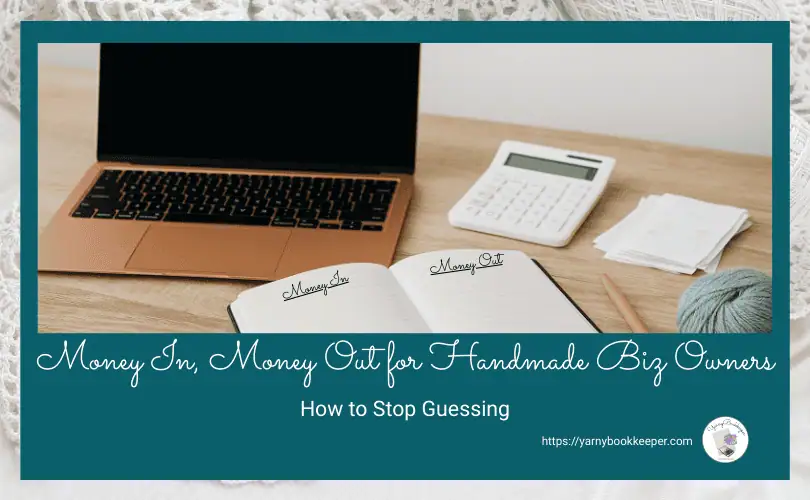
Money In, Money Out for Handmade Business Owners — How to Stop Guessing
Just finished tax season and felt shocked by your bottom line? Money in, money out doesn’t have to be a guessing game. This post walks handmade business owners through how to recover after tax season, understand what’s really happening with their numbers, and build weekly money confidence going forward — without overwhelm.


Owner’s Draw for Handmade Business Owners: How to Pay Yourself Without Messing Up Your Books
Owner’s draws are how small business owners pay themselves — but they’re often misunderstood. In this article, you’ll learn what an owner’s draw is, how it works in handmade businesses, and how to record it correctly in your bookkeeping.
This post was originally published in 2020 and has been updated to provide clearer information.