
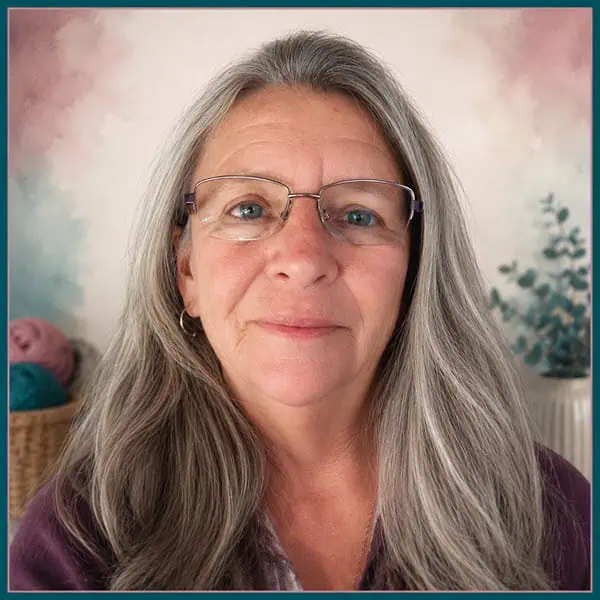
I’m a career bookkeeper, longtime small-business owner, and maker. I help handmade, creative, and craft business owners understand what’s happening with their money and how it affects their business — without turning them into bookkeepers.
I’ve spent more than 30 years working with real transactions, real businesses, and real bookkeeping messes. I’ve also spent decades helping build and support software designed to solve real bookkeeping problems for small businesses.
So when I started my own handmade business, I figured:
I’ve got this. I’m a bookkeeper.
And then I ran straight into the part nobody explains very well.
The accounting rules hadn’t changed. But suddenly I was dealing with materials, inventory, finished products, craft fairs, online platforms, payment processors, sales tax, product costs and all the other moving pieces that come with making and selling things.
Turns out, “separate your business money and track your income and expenses” only gets you so far.
That’s why The YarnyBookkeeper exists — to fill in the part generic bookkeeping advice leaves out and show makers how this stuff actually works in a handmade business.
Handmade business bookkeeping really is different
Generic bookkeeping advice isn’t necessarily wrong — it just doesn’t always give you enough information to handle the things that make a handmade business different.
When you buy yarn, fabric, beads, clay or other materials, you haven’t necessarily created an expense just because money left your bank account. Some of that money may now be sitting on your shelf as inventory until those materials become part of something you sell.
Then there’s Cost of Goods Sold, craft fair fees, payment processor fees, sales tax, owner contributions, online marketplace payouts and all the other little transactions that eventually have to make sense in your books.
Those details matter.
Not just because the IRS has rules about them, but because your bookkeeping should tell you what is actually happening in your business.
What I believe
- Bookkeeping isn’t just for tax time. It should help you understand what’s happening in your business while there’s still time to do something about it.
- Selling more isn’t the same as keeping more. More sales won’t automatically fix underpricing, high product costs, too much overhead or money quietly leaking out of the business.
- Generic bookkeeping advice often stops too soon for handmade businesses. “Track your income and expenses” is a start. It doesn’t explain inventory, Cost of Goods Sold and all the other moving pieces makers have to deal with.
- Inventory isn’t just some stupid accounting requirement. It’s money sitting on your shelf. Knowing how much you have tied up there can tell you a lot about what’s happening with your money.
- You don’t need to run right out and get an accounting degree. I’m not trying to turn you into a bookkeeper. You just need to understand enough to know what’s going on with your money and how that impacts your business.
Why my approach is different
I know the accounting rules.
I also know what happens when those rules collide with Etsy payouts, a craft fair cash box, a pile of receipts, $200 worth of yarn that was on sale, and a product that took four hours to make.
That combination matters.
I don’t think you need the entire accounting lecture every time you have a bookkeeping question. You need to understand this much: what’s happening, what you need to do about it, and why it matters to your business.
So that’s how I teach.
No giant accounting lecture just to answer one question.
No making something sound more complicated so I can look clever.
No bending the bookkeeping rules to make things easier, either.
I’ll show you how to handle the real-world situation in front of you and help you understand enough that the next time something similar comes along, it doesn’t feel like some monster hiding in the closet.
What you’ll learn here
You’ll find practical help with the day-to-day bookkeeping that comes with running a handmade business: where expenses go, how owner contributions work, inventory and Cost of Goods Sold, sales tax and platform fees, pricing and paying yourself fairly, bookkeeping routines, financial reports and the other money stuff nobody warned you would come with making and selling things.
But I’m not interested in teaching you how to enter numbers just for the sake of entering numbers.
The point is to be able to look at your bookkeeping and understand:
Where did the money go?
What did my products really cost me?
Am I paying myself fairly?
Can the business afford this purchase?
Is this actually working?
That’s when bookkeeping becomes useful.
What I want for you
I want you to be able to look at your numbers and make a decision without immediately defaulting to:
I guess I just need to sell more.
Maybe you do.
But maybe you’re underpricing. Maybe too much money is sitting in inventory. Maybe overhead has quietly gotten out of hand. Maybe that course, piece of equipment or giant yarn sale can wait until the business actually has the money for it.
I want you to be able to step back and ask:
Do I need this right now? Can the business afford it? Is this an investment that makes sense — or am I spending money because the credit card bill won’t show up until next month?
And when the answer is not right now, I want that to feel like a good business decision — not like failure.
You may never love bookkeeping.
You don’t have to.
But it can become an important part of the backbone of your business — something that helps you make calmer, smarter decisions instead of constantly feeling pressure to make more, sell more and add one more thing.
A few random things about me (because we’re human)
If I’m not working on bookkeeping stuff, there’s a pretty good chance I’m out walking with my boxer, Mortimer.
I also ride a Spyder, live on a dirt road in Vermont, and have a strong preference for simple systems that actually work over complicated systems that look impressive and then collect dust.
And I have very little patience for advice that sounds great in theory but falls apart the minute it meets an actual small business.
Bookkeeping advice included.
Ready for your first step?
You do not have to fix everything at once.
Start with whatever is making you mutter under your breath right now.
Maybe you don’t know where expenses go.
Maybe inventory and supplies are making your head hurt.
Maybe you have no idea how much you can afford to pay yourself.
Maybe your bookkeeping is behind.
Or maybe you just keep wondering:
Am I even doing this right?
Pick one.
We’ll start there.
A quick note about how I create content
The bookkeeping knowledge, examples, opinions, stories and occasional rants you find here come from me — and from more than 30 years of working with real numbers, real businesses and real bookkeeping messes.
I sometimes use AI as a collaborative tool to help research questions, organize my thoughts, sand the wording and create custom images that actually look like they belong on a handmade-business website instead of spending hours doom-scrolling through stock photos looking for something that’s kinda, sorta close enough.
AI helps with the process. It doesn’t supply the bookkeeping experience, decide what advice I give you or hit the publish button.
I review, revise, fact-check and approve what you see here.

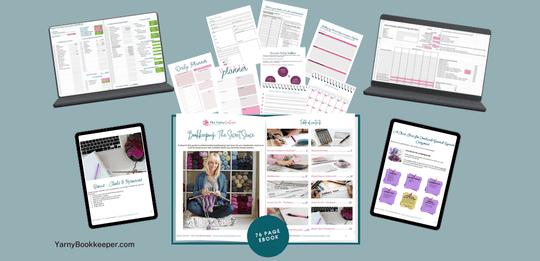
P.S. Please be sure to subscribe to my newsletter (below) to stay updated and get your FREE copy of the “Bookkeeping: The Secret Sauce” eBook.

If you'd rather be working with yarn, fabric, paint, or clay than trying to figure out what the heck is going on with your business money, you're in the right place.
I help makers understand what’s happening with their money—and what those numbers actually mean for their business. Because handmade business bookkeeping goes beyond simply tracking what came in and what went out.
You don’t need to become a bookkeeper or run out and get an accounting degree. You just need to understand enough to make better decisions about your business without all the accountant-speak.
👉 Want help figuring out your bookkeeping (without overcomplicating it)? Join the Free Handmade Business Bookkeeping community.
I am a coach/educator, not your bookkeeper or CPA. This information is for educational purposes, not financial or tax advice.
Full Disclosure - How I use AI
I use AI to create some blog images because it does a much better job of producing maker-specific images than I can usually find after hours of searching.
The ideas, teaching, and writing in my blog posts are mine. I use AI as an editing partner to help me check clarity, rein in my tendency to get too wordy, and occasionally keep me from wandering off on a tangent.
- Are Discounts Hurting Your Handmade Business? - October 16, 2026
- Free Bookkeeping Software for Handmade Businesses: What to Look For + Options to Consider - October 5, 2026
- Tracking Craft Fair Sales Without Losing Your Mind - September 20, 2026