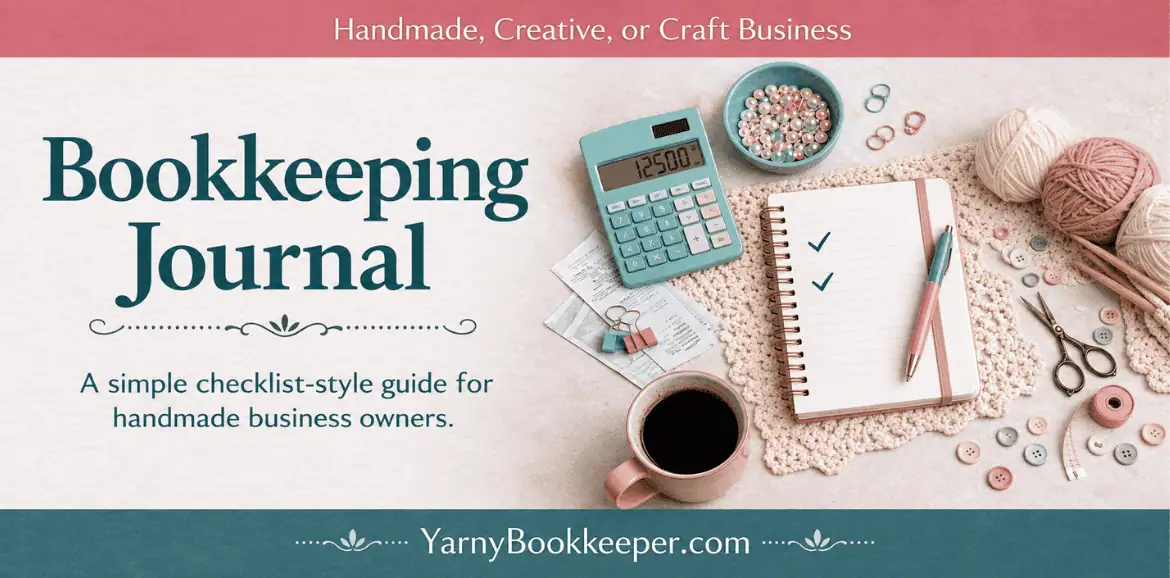
If you’ve been wondering what bookkeeping tasks you’re supposed to be doing — or when you’re supposed to do them — this free Journal will help you stop guessing.
It’s a practical, plain-English guide built specifically for handmade, creative, and craft business owners, with simple checklists for daily, weekly, monthly, quarterly, and year-end bookkeeping tasks.
You do not need to become a bookkeeper. You just need a clearer routine, a better handle on what matters, and a simple place to start.
Know what needs to happen, when to do it, and how to stay more organized without turning bookkeeping into another giant job.
Not sure what bookkeeping you’re actually supposed to be doing?
Maybe you’re keeping up with some of it…but still wondering:
- Am I doing this right?
- Am I forgetting something important?
- What should I be doing every week versus every month?
- And why does every bookkeeping article I find seem to give me a slightly different answer?
There’s plenty of generic bookkeeping advice out there. Most of it isn’t necessarily wrong — it just doesn’t always give you the whole picture when you make and sell your own products.
Handmade businesses have a few extra moving pieces: inventory, Cost of Goods Sold, selling fees, payment processors, sales tax, money you put into or take out of the business…and somehow you’re supposed to know when all of that needs your attention.
Sometimes you just want somebody to hand you a list and say, “Here. Start with this.”
That’s exactly what the Bookkeeping Journal is designed to do.
It gives you simple checklists for the bookkeeping tasks that may need your attention:
- Daily
- Weekly
- Monthly
- Quarterly
- At year-end
And no, that does not mean you’ll be doing bookkeeping every waking minute.
You don’t need to tackle everything at once. The idea is to give you a routine you can actually keep up with, so you know what needs to happen and when instead of leaving everything until tax time.?
And yes…even a bookkeeper needed a routine.
When I first started my own handmade business, I already knew how to do bookkeeping.
What I didn’t have was a simple routine for keeping up with my own business while I was also making products, buying supplies, filling orders, selling, and doing all the other things that come with running a handmade business.
Knowing how bookkeeping works and having a system you can realistically keep up with are two different things.
So I created a simple process for myself.
And eventually, that process became the Bookkeeping Journal.
A bookkeeping routine you can actually keep up with
The Bookkeeping Journal gives you a clear checklist of the bookkeeping tasks that may need your attention throughout the year.
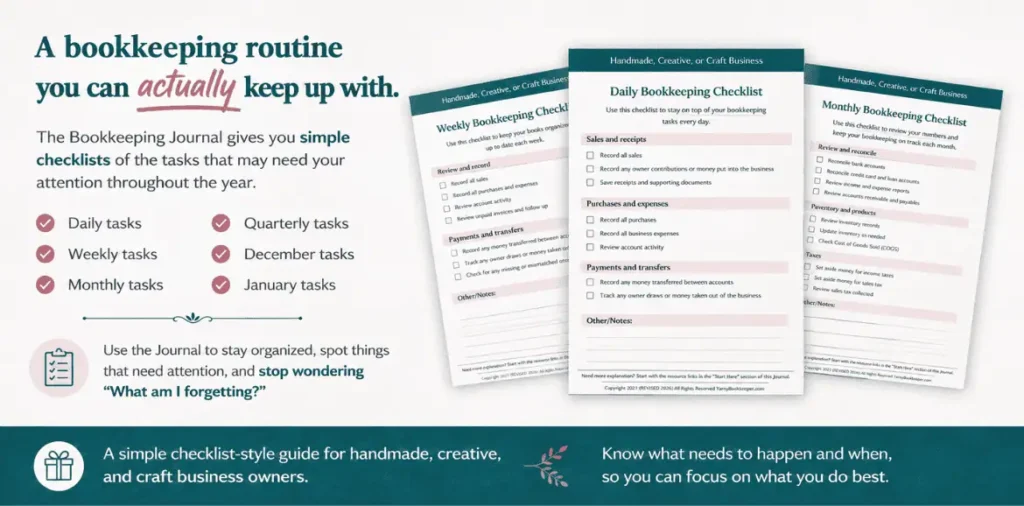
Instead of trying to remember everything — or saving it all for one giant bookkeeping day — you can use the Journal to see what needs to happen:
- Daily
- Weekly
- Monthly
- Quarterly
- In December
- In January
You may not need to do every task every time.
How often something needs your attention depends on how often you make sales, buy supplies, move money, manage inventory, or use different selling platforms.
The point is not to keep you chained to your bookkeeping.
The point is to help you stay caught up, spot things that need attention, and stop wondering, “What am I forgetting?”
The Journal doesn’t replace your bookkeeping system or record your transactions for you.
It simply gives you a practical routine to follow, so you know what needs to happen and when.
And if you need more explanation about a particular bookkeeping task, the Journal points you toward additional YarnyBookkeeper resources that can help.
Here’s what the Bookkeeping Journal helps you keep track of
The Bookkeeping Journal gives you a simple place to see what bookkeeping tasks may need your attention throughout the year — without trying to remember everything yourself.
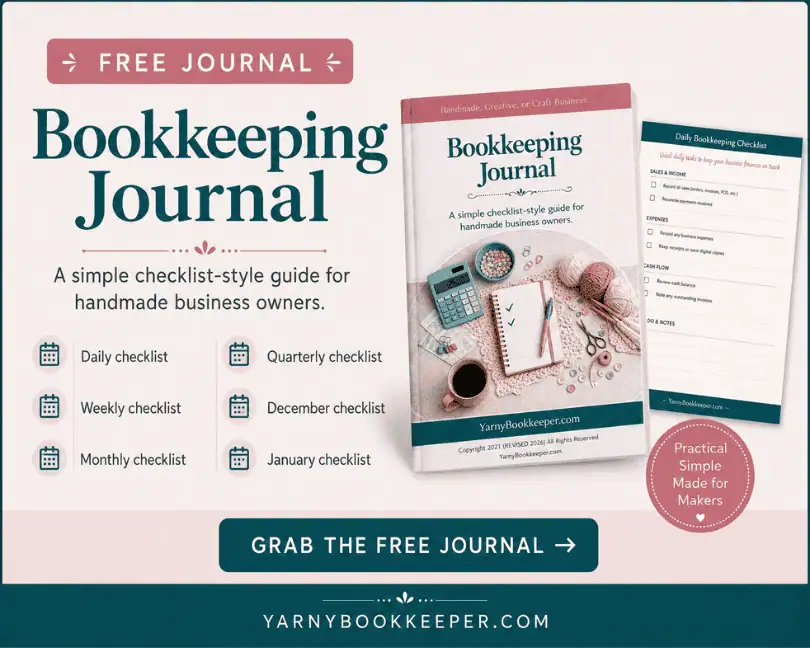
Inside the 12-page Journal, you’ll find:
A few bookkeeping basics to help you get oriented
A plain-English starting point for understanding the moving pieces of handmade business bookkeeping, including inventory, Cost of Goods Sold, sales tax, owner contributions and draws, and choosing a bookkeeping system you can actually keep up with.
Handmade Business Setup Checklist
A practical checklist to help you get the financial side of your business set up, including banking, payment processors, bookkeeping, sales tax, and selling platforms.
Daily Bookkeeping Checklist
Keep the little things from piling up by tracking sales, purchases, deposits, receipts, inventory changes, and anything that needs follow-up.
Weekly Bookkeeping Checklist
Catch missing transactions, review account activity, check that your income and expenses are up to date, and make note of anything that needs attention.
Monthly Bookkeeping Checklist
Close out the month, reconcile your accounts, review your numbers, check sales tax, and look for anything that may need your attention before it turns into a bigger problem.
Quarterly Bookkeeping Checklist
Handle quarterly tax and sales tax tasks, review your spending and Income & Expense Report, and take a step back to see how the business is doing.
December Bookkeeping Checklist
Review inventory, prepare for year-end inventory counts, look over your numbers, and make note of anything that needs to be cleaned up before the year closes.
January Bookkeeping Checklist
Wrap up the previous year, gather what you need for tax prep, set up the new year, and review things like your budget, pricing, and fair hourly wage.
You may not need every task every time.
The Journal is there to help you know what to check, when to check it, and what may need your attention — so bookkeeping feels more manageable and less like one giant job waiting for you later.
What makes this Bookkeeping Journal different?
A lot of bookkeeping advice starts with the basics: track your income, track your expenses, save your receipts.
That advice isn’t necessarily wrong.
It just doesn’t always give you the whole picture when you make and sell your own products.
Handmade businesses can have a few extra moving pieces, like:
- Inventory and materials
- Cost of Goods Sold
- Selling and payment processing fees
- Sales tax
- Money you put into or take out of the business
- Year-end inventory and other bookkeeping tasks
Those are the things that can make handmade business bookkeeping feel more confusing than it sounds like it should be.
The Bookkeeping Journal was created with those moving pieces in mind.
It’s not a generic small-business checklist with a few craft supplies sprinkled on top. It comes from my experience as both a bookkeeper and a handmade business owner who understands how all of these pieces fit together in the real world.
You don’t need to become a bookkeeper.
You just need practical guidance that fits the business you actually run — so you can understand enough to know what needs your attention and what’s happening with your money.

If you'd rather be working with yarn, fabric, paint or clay than deal with a pile of receipts or bookkeeping spreadsheets, you're in the right place.
I help you get a handle on your numbers, make sense of what's coming in and going out, and actually feel confident running your business -- without accountant-speak or guilt.
👉 Want help figuring out your bookkeeping (without overcomplicating it)? Join the Free Handmade Business Bookkeeping community.
I am a coach/educator, not your bookkeeper or CPA. This information is for educational purposes, NOT financial or tax advice.
Full Disclosure - How I use AI
I use AI to create blog post images, because it produces better maker specific images than I can find after spending hours searching through Canva and other places.
I write ALL of my own blog posts (sales pages, etc.), but I do run the draft through AI to make sure it's clear (and so I don't get too wordy or go off on a tangent!).
- Is Your Handmade Business Actually Working? Let Your Bookkeeping Tell You - August 23, 2026
- How to Record an Owner Contribution in Your Handmade Business - August 9, 2026
- 6 Bookkeeping Thoughts That Keep Handmade Business Owners Stuck - August 3, 2026