
Black Friday deals can be tempting, especially when you’ve got your eye on a new computer, essential materials for your handmade business, or a course you’ve been thinking about taking.
And you know what’s coming. Your inbox will soon be overflowing with sales emails from every yarn supplier and course creator you’ve ever subscribed to (if it isn’t already!).
With so many tempting offers, it’s easy to get caught up in the excitement and let impulse buying hijack your budget. After all, just because something is on sale doesn’t mean your business needs it—or can afford it.
That’s where a Black Friday shopping plan comes in.
A little planning can help you focus on what your business actually needs, stick to what you can afford, and take advantage of worthwhile deals without emptying your wallet.
Crafting your Black Friday shopping strategy: A Guide to Intentional Spending
Follow these 8 steps for creating your own intentional spending plan for your Black Friday shopping this year.
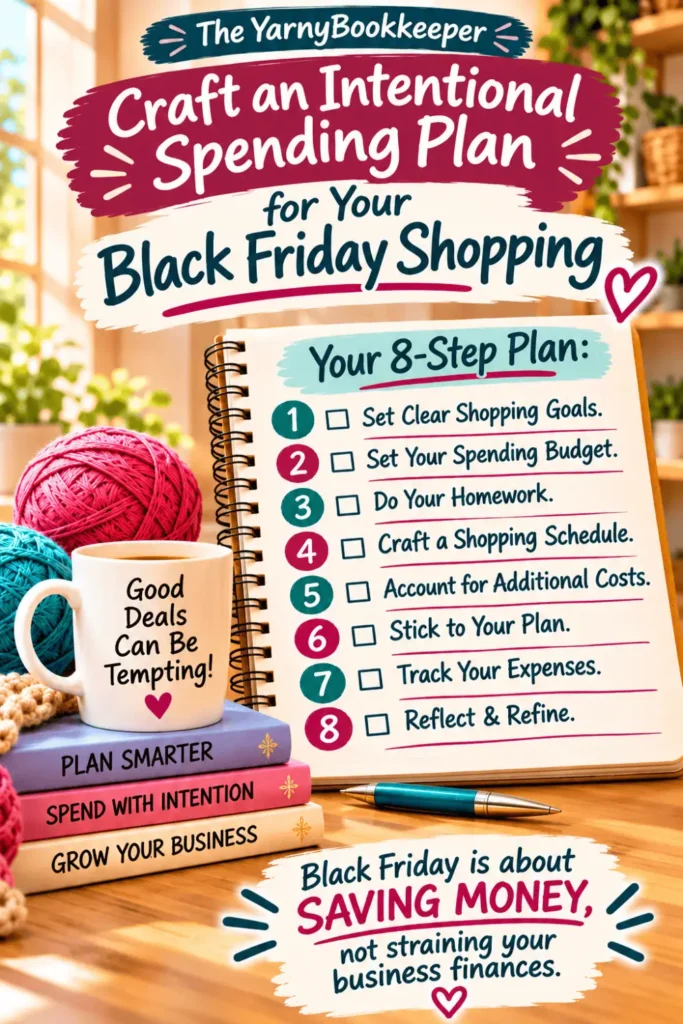
Here’s how to create an intentional spending plan:
Step 1: Set Clear Shopping Goals
Start by creating crystal-clear, purpose-driven shopping goals for Black Friday.
Take a few minutes to create an intentional and focused list of the things you want and NEED for your business. Give priority to the things your business genuinely NEEDS first.
- Do you NEED a new computer?
- What essential tools and materials (like yarn) do you NEED?
- What business courses would BENEFIT you and your business the most?
- Now, list all the wants.
Prioritize these items based on their importance and urgency. Having well-defined objectives will keep you on track and prevent impulsive splurges.
Step 2: Set Your Spending Budget
When you have your shopping list ready, it’s time to establish a budget.
- Decide on your total spending limit.
- Allocate a specific amount to each item on your list.
- Ensure your budget aligns with your business finances to avoid dipping into your family budget.
Having money in the business checking account doesn’t automatically mean it’s all available for Black Friday purchases.
Some of that money may already be needed for upcoming bills, taxes, or other obligations.
Remember, Black Friday is about SAVING MONEY, not accumulating business debt or straining your family’s finances.
Need help creating a budget? Read “A Realistic Budget Template for Handmade Business Owners” and download the free template.
Step 3: Do Your Homework
Thoroughly research the things you plan to buy.
- Compare prices from various retailers, especially for big-ticket items like computers and laptops.
- Hunt for additional discounts, coupons, or cashback offers for these high-value purchases.
- If you’re considering a course, be aware of any VIP Ticket upgrade costs.
Step 4: Craft a Shopping Schedule
Black Friday shopping can be chaotic, with early-bird specials, doorbusters, and VIP upgrades.
- Check the sales dates and times so you don’t miss out.
- Mark the course enrollment and VIP Ticket deadlines.
- Create a schedule for the deals you’re most interested in to ensure an organized approach.
Step 5: Account for Additional Costs
Keep extra expenses in mind while shopping.
- Factor in taxes and shipping for online orders.
- Consider extended warranties or protection plans for electronics.
- Don’t forget the cost of the VIP Ticket upgrade for courses.
Always consider the total cost of each item, not just the initial price.
Step 6: Stick to Your Plan
This is always the hardest thing to do! When those Black Friday offers flood your inbox, it’s easy to get swayed by tempting deals or FOMO.
Stick to your plan as closely as possible and avoid those impulse purchases.
A 50% discount isn’t saving your money if you’re buying something your business doesn’t need and can’t afford.
If you do come across an unexpected deal, though:
- Consult your budget and make informed decisions.
- Can you afford the extra expense?
- What needs to be adjusted in your original budget?
- Ask yourself if you REALLY NEED the item.
- Another course on Instagram reels? (When you already have 3 that you haven’t touched).
- Yet ANOTHER marketing course? (When you already have several, but you’re hoping this one MIGHT be easier to understand).
- That discounted yarn you’ve been eyeing? (But have no purpose for).
Step 7: Track Your Expenses
Yup, this is where the bookkeeping comes into play!
As you shop, check purchases off your list and record what you actually spent, including sales tax, shipping, and any additional costs. Keep your purchases organized and categorized correctly in your bookkeeping system, and compare your actual spending to your budget.
If you’re getting close to your spending limit, consider removing items from your shopping list rather than dipping into your family budget.
If you do transfer personal money into your business to cover purchases, be sure to record that transfer as an “Owner Investment“.
Step 8: Reflect and Refine
After your Black Friday shopping spree, take time to reflect.
- Did you have to take money from your family budget to cover business purchases?
- Did you stick to your plan?
- Did you overspend in certain areas?
Use this experience to fine-tune your spending plan for future shopping events, like those “Year-End Clearance Sales.”
Conclusion:
Black Friday shopping offers a remarkable chance to save money on items you want or need.
However, if you don’t have a well-structured spending plan, you risk falling prey to impulse buying, FOMO, and spending far more than you think.
By setting clear shopping goals, establishing a budget, doing thorough research, and exercising discipline, you can make the most of your shopping without jeopardizing your financial well-being.
Remember, successful Black Friday shopping is about more than just snagging the best deals; it’s also about safeguarding your financial health.
Happy shopping!

If you'd rather be working with yarn, fabric, paint, or clay than trying to figure out what the heck is going on with your business money, you're in the right place.
I help makers understand what’s happening with their money—and what those numbers actually mean for their business. Because handmade business bookkeeping goes beyond simply tracking what came in and what went out.
You don’t need to become a bookkeeper or run out and get an accounting degree. You just need to understand enough to make better decisions about your business without all the accountant-speak.
👉 Want help figuring out your bookkeeping (without overcomplicating it)? Join the Free Handmade Business Bookkeeping community.
I am a coach/educator, not your bookkeeper or CPA. This information is for educational purposes, not financial or tax advice.
Full Disclosure - How I use AI
I use AI to create some blog images because it does a much better job of producing maker-specific images than I can usually find after hours of searching.
The ideas, teaching, and writing in my blog posts are mine. I use AI as an editing partner to help me check clarity, rein in my tendency to get too wordy, and occasionally keep me from wandering off on a tangent.
- How to Track Handmade Business Expenses Using Just 5 Main Categories - November 13, 2026
- Black Friday Shopping Plan: 8 Steps for Your Handmade Business - November 2, 2026
- Is Profit Leaking Out of Your Handmade Business?Here’s Four Warning Signs - October 21, 2026